I Carry Your Heart

I carry your heart with me (I carry it in

my heart) I am never without it (anywhere)

I go you go. . .

I carry your heart (I carry it in my heart)

-    e.e. cummings


 .  . . being reflections on the 30th anniversary of my heart transplant. . .


Driving north on I-35 after having just left a powerful Somatic Experiencing® training session in which I relived significant moments of my heart transplantation, tears streamed down my face as I blasted the musical “Rent” at full volume on my car’s CD player.[i]

♪There's only us
There's only this
Forget regret or life is yours to miss

No other road no other way
No day but today

There's only now
There's only here . . .
No other path
No other way
No day but today♪


Deprived of the pounding music and lush harmonies, the words lack the same senses of urgency, pleading, and poignancy that ring throughout every cell of my being as the song escalates, but the sentiment -- the exigency to live each day fully and deliberately – stands. Living in such raw awareness of the precarity of life, as certainly I do after surviving multiple cardiac arrests, illuminates life’s sheer preciousness in a way that moves one to tears, at least it does me.  The looming awareness of mortality forces an examination of one’s life. “Living a self-conscious life, under the pressure of time, I work with the consciousness of death at my shoulder,” wrote Audre Lorde after learning of her breast cancer diagnosis. “ . . . It helps shape the words I speak, the ways I love, my politic of action, the strength of my vision and purpose, the depth of my appreciation of living” (Cancer Journals,16).

 I have lived with that consciousness since I first came face-to-face with my mortality when, at the age of twenty, I was struck down in my prime by an infection in my heart that took me within moments of death, and left me hospitalized and bed-ridden for months. Like Lorde, it made me evaluate my purpose, my relationships, my politics, my daily actions through the lens of the brevity of our existence.  It made me different, odd, diving too deeply into questioning the meaning of life, living and loving too intensely than was comfortable for most people my age.  “You’re so deep!” “You’re so intense!” people would say to me as they backed away.  I was simply too much.

 I found camaraderie in books – in Albert Camus’s The Rebel, the whole premise of which stands on the politics that follow once having decided that life is worth living, his journals of his youth spent in hospitals with tuberculosis at about the same age I was, and his essays expounding his deep love of the sea, the sun, and life; in Audre Lorde’s “Uses of the Erotic,” requiring us “to demand from ourselves and from our life pursuits that they feel in accordance with that joy which we know ourselves to be capable of” (57); in Adrienne Rich’s mandate for living an honorable life in her demanding “Of Women and Honor,” [ii] and most especially in the resonance of her poem “Phantasia for Elvira Shatayev” --  “I have never loved/like this   I have never seen/ my own forces so taken up and shared/ and given back . . . We will not live/ to settle for less We have dreamed of this all of our lives.”[iii] 

I took risks in my work and relationships. I dived into feminist movement and action.  I gave birth to myself, and then to my child and experienced a love beyond telling.  And then, a little over a year after my child was born, my heart stopped in the middle of giving a concert.  They said I played my heart out. Having survived. back out in the world a little over a year later, undaunted, I ignored advice and in the midst of an impassioned speech to save a beloved stretch of beach, it stopped again. I’m one of the lucky few to have survived not one, not two, but three cardiac arrests.  My passions and actions, now tempered by an implantable defibrillator that would shock me into quietude lest my heart rate rise past the threshold of safety, I awaited, and finally received, a life-giving transplant from one whose life ended too soon.  And yet it had not ended entirely, for her heart continued beating, but in my body. So now this question – what does it require of my life, dear Jodi, to carry your heart in my heart?[iv]

 To carry -- the meanings are multiple: to support while transporting; to convey; to contain and direct the course of; to harbor within the body; to sustain the weight of; to provide sustenance for; to be solely responsible for the success, effectiveness, and continuation of; to prolong and maintain over time; to gain victory for – to name only the most pertinent ones.  For all of these are now my charge.  How best do I support you?  Sustain the weightiness of honoring your life?  Provide the appropriate sustenance to prolong your/our life over time and to be solely responsible for the success and continuation of that life? To gain a victory in that way for you?  To provide safe harbor, security, and comfort for your/our spiritual well-being?  How do I convey to those who loved you the sheer amazement at the steadiness of this new heart, the exquisite enjoyment of sunlight streaming through a window without fear, the gratitude for the years and precious moments you have given me? How do I direct the course of my/our life? It is as if I am living poet Mary Oliver’s query -- “Tell me, what is it you plan to do/with your one wild and precious life?” 

I’ve heard these words from Oliver’s “The Sunny Day” quoted so many times that they verge on becoming trite, so I hesitate to use them here, except to recount the first time I heard them.  I had taken students to the local Benedictine retreat center where we spent time walking the labyrinth and talking about prayer. Sister Lois, the retreat center director, began our time together by sharing Oliver’s poem. I must have been a few years post-transplant at that point, and those final words grasped me by the heart and wouldn’t let go. Knowing viscerally how wild and precious this life is, the poet asked me not only to acknowledge that, but also to ponder what I was going to do with it.  More than this, she asked how was I going to honor it, for that is the meaning of “precious” after all – something worthy of honor.  But now this task carried a deeper responsibility.  How was I to live a life worthy of this honor, and not just of my own, but also of her life– the child’s whose heart I now carried in my heart?     

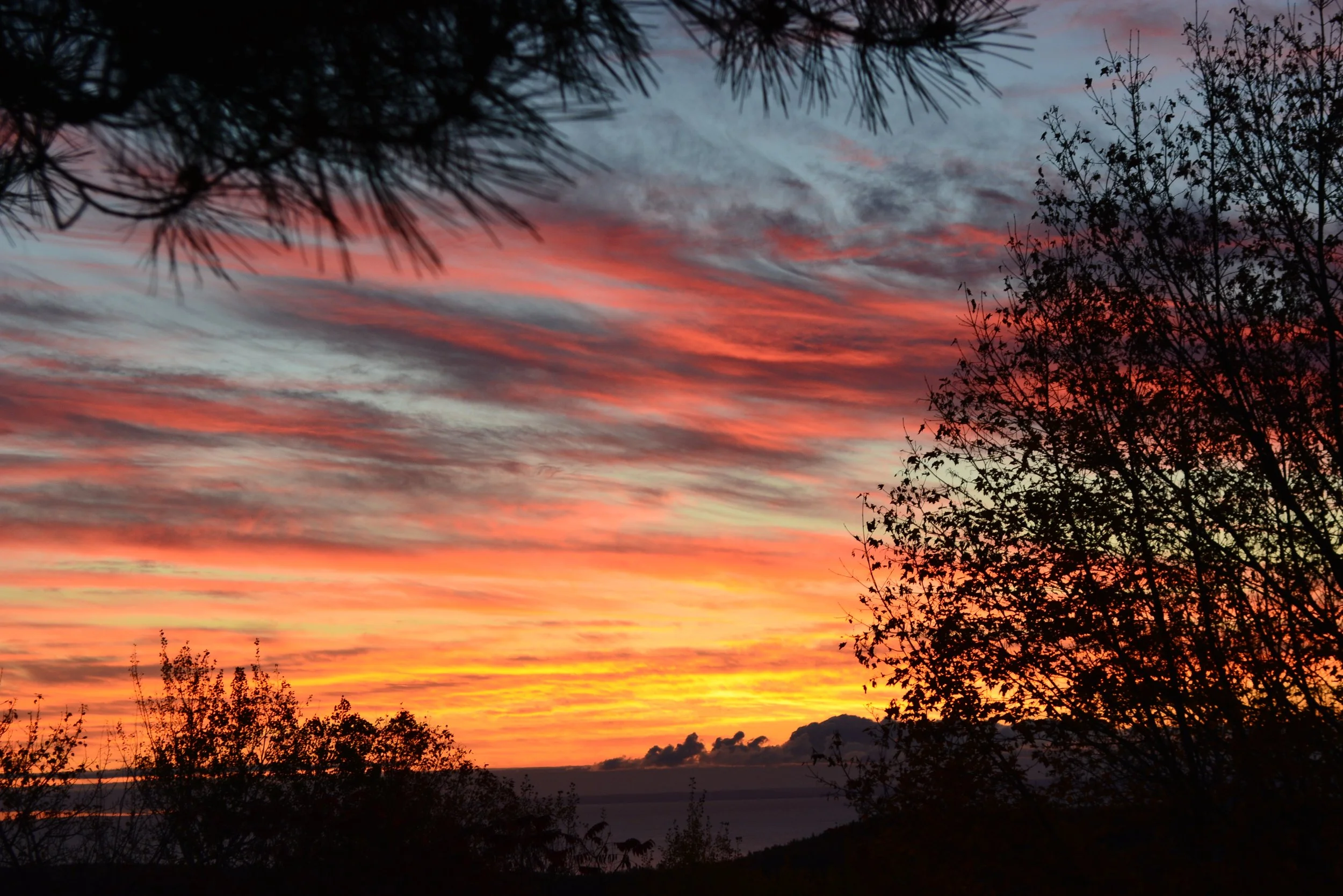
I had delved into Adrienne Rich’s “Women and Honor” dozens of times, and knew that honoring this life -- our lives -- required at the minimum my honesty with myself, my loved ones, my life pursuits. It demanded that I live in line with my values, that I act so as to enhance the possibility of life for every living being, and that I not settle for anything less than living “in accordance with that joy I knew myself to be capable of.” Above all, honoring this life asked that I not let a day go by without fully appreciating the opportunity to be a part of it.  Of course, I have – days when I’ve been so sick, or in such desperate grief, or gutted with worry, or simply bogged down with papers to grade or bureaucracies to navigate, that just getting through the day can feel like a chore.  But then a glorious sunrise, or stunning hoarfrost, or an unexpected kindness will remind me.  Or a political issue – an injustice being perpetrated on another, a threat to the land and the water, a violation of rights will stir me from complacence and require my action and speech.  Or the aching need of a friend, a loved one, a small child will remind me that, in the words of my favorite book on childrearing – “You can postpone anything but love” – and that the greatest and perhaps rarest gift I can give to anyone with the time that I have is generous, loving attention.   

 A transplant of any kind is often referred to as a “second chance.” Thirty years ago today I received that gift -- not only of life, but of the chance to live more deliberately, to live well, to do good, to become love, in deepest awareness of the preciousness of each day. And so, it is in gratitude and prayer that I repeat these words of e. e. cummings: 

i thank You God for most this amazing
day: for the leaping greenly spirits of trees
and a blue true dream of sky; and for everything
which is natural which is infinite which is yes
(i who have died am alive again today,
and this is the sun’s birthday; this is the birth
day of life and of love and wings . . .

 We fly together, you and I.  I carry your heart with me, you carry me with your heart. 


Sources

Camus, Albert. 1968. Lyrical and Critical Essays. Trans. Ellen Conroy Kennedy. New York: Vintage.

______. 1956. The Rebel: An Essay on Man in Revolt.  New York: Vintage.

cummings, e.e. 2016. Complete Poems:1904-1962. New York: Liveright.

Larson, Jonathon. 1996. Rent.

Lorde, Audre. 1984. Sister Outsider: Essays and Speeches by Audre Lorde. Trumansburg, NY: The Crossing Press.

______. 1980. The Cancer Journals. San Francisco: Spinsters Ink.

Oliver, Mary. 2017. Devotions. New York: Penguin.

Rich, Adrienne. 1979. On Lies, Secrets, and Silence: Selected Prose: 1966-1978. New York: W.W. Norton.

______. 1978. The Dream of a Common Language: Poems 1974-1977. New York: W. W. Norton.

Rolfe, Randy. 1985. You Can Postpone Anything but Love: Expanding Our Potential as Parents. Edgemont, PA: Ambassador Press.


[i] For those who do not know the story of Rent, it revolves around the precarity of life living impoverished and unhoused in the city, all in the context of the AIDS crisis. The composer, Jonathon Larson, himself tragically died at the age of 29 of an aortic dissection the day before Rent opened on Broadway.  Perhaps on some level he sensed the precarity of his own life for certainly his music pulses with that awareness.

[ii] The essay appears in Rich’s collection of essays, On Lies, Secrets, and Silence.

[iii] Elvira Shatayev was the leader of an all-women climbing party on Lenin Peak.  A sudden storm, considered to be the worst in 25 years, trapped them near the peak without anything to break the ferocity of the winds.  They did not survive. Her husband later found her diary when he climbed the peak to retrieve their bodies.  Adrienne Rich put Shatayev’s words to verse in her poem, “Phantasia for Elvira Shatayev,” The Dream of a Common Language.

[iv] My donor was a 9-year-old little girl whose name was Jodi. She died far too young of a brain injury following a small plane crash. Waiting for the helicopter to take me to the transplant hospital was a very sobering time, knowing that at that same time, someone was saying goodbye to their loved one.

   At that time, a transplanted heart was sewn into the upper chambers of the receiving heart, so I do carry Jodi’s heart in my heart. 

Kairos Time Redux

At a friend’s suggestion, I picked up a copy of May Sarton’s At Eighty-Two the other day. I’d read Sarton’s Journal of a Solitude decades ago, and it spoke to me so deeply of a life I wanted to live – a life filled with flowers, animals, friends, and days by the sea filled with writing.  Since I’d written about kairos time just a few weeks before, when I opened At Eighty-Two I was delightfully surprised to find that she had named this journal “Kairos.”  Sarton gave the term a different definition than I had -- “a unique time in a person’s life; an opportunity for change.”

Written near the end of Sarton’s life, the unique time she was referencing was aging — her coming to terms with it and how it presented occasions for change.  As I’ve witnessed friends and family members coming of age, so to speak, I’ve thought often of the challenges aging brings, as well as the opportunities.  Reading Sarton’s journal provided me with increased understanding and compassion for those who are ahead me on this journey, as well as time for reflection on the quality of their lives and what may lie ahead for me as I move toward what Sarton called “real old age.”  “70 seems so young!” she remarked from the perspective of the age of 82, so perhaps I have time to prepare, though like Sarton, my parents were aged in their 70s, my mother suffering a massive stroke that left her speechless at 72, the same age I will be on my next birthday, and my father the incapacity and dementia of advanced Parkinson’s disease in his mid-70s. 

Many of the entries in Sarton’s journal center around the changes she did not invite into her life – her diminished physical and mental capacities.  “Forgetting where things are, forgetting even the names of friends, names of flowers . . . forgetting so much makes me feel disoriented sometimes” (27).  I’ve certainly experienced all of these.  Recently, I spent many hours trying to remember where I’d put my son’s 1st year calendar, and many more trying to find an important notebook.  There’s a particular flower in my garden whose name I regularly forget, only knowing it begins with “a.”  I go through the list – allium, alyssum – ah, there it is, astilbe. I’ve yet to feel disoriented by this, though a bit disquieted, especially when I go down to the basement and in the short time it took to traverse the stairs no longer have any idea why I went down there.  Surely there was a reason.  I do wonder, however, about my dear sister, suffering from Alzheimer’s, as she can get lost in time and not know the present from the past, or of a friend, similarly afflicted and now deceased, who would get lost walking around his long-time neighborhood, or of my father who had awake nightmares, reliving soldiers bleeding out in the MASH he ran in World War II. What is it truly like to live in that state of disorientation?  How fearsome, even panicky it must be. How can one prepare for that? How can one provide comfort to those experiencing it? 

Many pages of Sarton’s journal are devoted to the piles of papers on her desk, the boxes of  unanswered letters, and the time she wastes – sometimes hours in a day – trying to find a misplaced bill or a particular photograph. The clutter consumes her and she longs for an empty desk.  She writes that she doesn’t want any more things in the house that will need to be disposed of, and that she is even bored with her books.  Many of my friends and I are at the same stage of decluttering and disposing.  It seems we spend the first three quarters of our lives accumulating and the rest of it trying to rid ourselves of things we no longer need nor want.  Books are the one exception for me, for I seem to accrue them perhaps even more quickly than I empty my house of them.  I did a great emptying of over two thousand books when I moved my officeful of books into my home.  It’s so difficult now to decide which ones should go.  Perhaps I’ll have a chance to teach again, or want to re-read a beloved text, or seek out particular passages for a blog post.  Maybe my heirs will appreciate this or that book someday.  My friend, Steve, who died many years ago now, appointed a mutual friend to be the executor of his books, with a particular order in which friends could peruse his books and choose those they would like.  I’d like to do the same.  For the time being, I post those I’m ready to part with on Facebook, and have such joy in placing them in the hands of friends who will enjoy them now. Plus, this often gives me the opportunity to visit with friends I haven’t seen in a long time.  The paper clutter is another story. I’m in the midst of another purge at the moment, though as I sort through the files and piles, I often find a treasure that I’m so glad to have kept. Perhaps I’ll revisit it in another five years.   My friend, Joan, stripped her belongings down to the bare bones in the last years of her life – her possessions finally amounting to a few forks, spoons, and knives; a couple of pans; three plates; two cups; a couple changes of clothes; three blankets and the sheets on her bed; a couch, a bed, some chairs and a table; a few books; and the new laptop that let her stay in touch with her grandchildren that I’d gotten for her a few weeks before she died. I have no desire to do the same, still appreciating the plants, artwork, scattered dog toys, piles of books and music, and enough dinnerware to welcome guests that make this house a home, but I admired her paring down of the paper clutter to one succinct notebook that made clear, if not easy, to know what to do and whom to call on that day I found her collapsed on her living room floor. 

Increasingly throughout her journal, Sarton ponders “how to deal with continual frustration about small things like trying to button a shirt” (27), unsettled by her “pitiable state of weakness and inability to do anything much” (78), her inability to walk around her garden – one of the great joys of her life, the difficulty of going up and down stairs, and the frightening fatigue that made getting out of bed each day a struggle.  I’m fortunate still to have energy, far more than I had in earlier years. In some ways I’ve had the unique opportunity to experience what it is to “youthen,” given what a particularly eloquent friend of mine has termed my “Benjamin Buttony” life of spending my 20s and 30s in and out of hospitals, with all sorts of limitations on my physical abilities, and having “died” at least three times.  I don’t look back on the glory days of my youth and vigor since I’ve been far more vital in my 50s and 60s than in younger years.  But like Sarton, I’m frustrated by what my hands can no longer do — as she says, small things, like trying to open jars or to snap the multitude of snaps on my grandson’s onesies, not to mention all the buckles on the stroller.  A long-time friend and I recently had a lively chat of all we now rely on – jar openers, pliers, and partners – to open ziplock bags, medicine bottles, baby food containers.  At least I can still type.  No longer able to write, Sarton had taken to dictating her books.  And while I’ve given up some favorite hikes, no longer trusting my balance on the steep slopes, I’m still able to go for long walks in the woods every day.  Perhaps one of the lessons I’m learning from this is the importance of appreciating every day those things I can still do. 

One of Sarton’s deepest discomforts and dissatisfactions of her old age was not having achieved the kind of recognition and acclaim she so desperately craved, bemoaning not being included in this or that anthology or having had her poetry reviewed for years, despite the dozens of books she had written, and the thousands sold, and the overwhelming number of letters from those who appreciated her work.  I am grateful to be rid of any need for that I may have had in my youth.  Perhaps that was one of the great gifts of struggling so mightily simply to live in my earlier years, and certainly a lesson to be culled from Sarton’s journal – to come into old age with a knowing that it is enough, no, more than enough, to have lived and loved well, to have given what we could give, and hopefully to have enhanced life for some and done a little good in the world. As Carol Christ put it so eloquently, that “while recognizing inevitable death, loss, and suffering,  . . .  our task is to love and understand, to live for a time, to contribute as much as we can to the continuation of life, to the enhancement of beauty, joy, and diversity” (321).

As she lost her abilities and capacities, Sarton increasingly dealt with depression, and came to a point where she welcomed death. Yet, she began to realize that one of her “ . . . problems has been that anything which was not writing at my desk did not seem like my real life or valid work . . . “ (107). In the later entries, she chastised herself on a nearly daily basis for all she had not accomplished.  I’ve suffered the same affliction much of my life, often considering only those things I truly consider to be “useful,” mostly to others, as worthy of my time, and rarely allowing myself the simple pleasures of playing the piano, putting together a jigsaw puzzle, listening to music, or sitting by the lake for any length of time.  Here I need to hearken to Sarton’s insight, revealed to her as she entered this new phase of life– “If I can accept this, not as a struggle to keep going at my former pace but as a time of meditation when I need ask nothing of myself, will nothing except to live as well as possible, as aware as possible, then I could feel I am preparing for a last great adventure as happily as I can.”  She was, she said, “learning a new kind of happiness . . . which has nothing to do with achievement or even creation” (252).  I’m not quite there yet, but I am sensing that this letting go of the need to be productive and accomplish so much in a day may be the most important lesson in this journal for me.     

The things that once made me aspire to a life like Sarton’s, however, continued to enliven her days, as they do mine.  She had a multitude of dear and long-lived friends and intimates with whom she corresponded and visited regularly.  Though Covid has made those loved dinners and lunches out with friends a thing of the past for me, I’m so grateful for the companionship of those with whom I correspond, speak, and walk regularly, or with whom I pick up as if no time has passed at all even though it’s been months or years.  I’ve found such treasure in friendships that now span twenty, fifty, even seventy years.  It is a different kind of knowing and loving than I ever knew possible – one of the greatest gifts of “real old age.”  She delighted in good food, and to those who encouraged her to eat a healthier diet she said, “damned if I’m not going to have a piece of chocolate every day” (262) — a passion I share. And of course, Sarton had her books; her house filled with flowers, which, she said, “are as important as food, perhaps more so” (60); and her revels in the sunrise, especially “when the leaves have gone,” and she could view “ a great sea of ocean from left to right,” enabling her to  see that “much is good” (133-134), as I do also, now that the leaves have gone and the great expanse of Superior opens before me. And then there is Pierrot, her beloved cat, who brought her such comfort and delight, and as she so often said, made her life livable.  What indeed, would we do without the unconditional love and deep comfort of the trust and companionship of our four-legged loved ones?

As I begin to experience, and occasionally bemoan, the diminishment of my physical and mental capacities rather than their expansion, I’m finding that what quickly comes to mind are the many other capacities that increase with age – patience, understanding, graciousness, and a humility engendered by all that is now so regularly humbling. I hope I can welcome this different kind of Kairos time, between the Christmas and the end of my years of life,[i] for the unique time that it is and the new opportunities it brings, with a recognition and acceptance my limitations, as well as a certain grace to myself for all I can no longer do while embracing what I can, and like Sarton, with a continuing delight in and appreciation for the gifts of friendship, flowers, first light, and furry ones. 


Sources

Christ, Carol. 1989. “Rethinking Theology and Nature.” In Plaskow, Judith and Carol Christ, eds. Weaving the Visions: New Patterns in Feminist Spirituality. San Francisco: HarperSanFrancisco. 314-325.

Sarton, May. 1996. At Eighty-Two. New York: W.W. Norton & Co.


[i] See my earlier post, “Kairos Time,” which I experience in the timeless days between Christmas and New Years’. 

We Were Told Not to Eat the Snow

As children growing up in the ‘50s, we were told not to eat the snow. That was the extent of my awareness of the clouds of toxic radiation circling the globe from atomic bomb atmospheric testing happening at that time.  Only later would I learn about the US dropping atomic bombs on Hiroshima and Nagasaki, and as a grad student in political science study the pros and cons of the international defense strategy of “mutually assured destruction” – or MAD -- the “mad” attempt at insuring peace through the ever-increasing stockpiling of nuclear weaponry.  But it wasn’t until reading Susan Griffin’s A Chorus of Stones that I would learn of the secrecy and deceit at the heart of the entire project of the creation, testing, and effects of nuclear weapons.  A few years later, I had the privilege of having among my students a young man from Nagasaki. He was concerned that, unlike Nagasaki, where a ceremony is held annually to commemorate the victims of the bombing and to remind the world of the horrors of nuclear war, here in the US, the only country actually to have used the atom bomb, there is little memory or awareness.  So he brought with him a book and a film documenting the reality of the horrific effects of the atomic bomb, asking me to place them in the library so people here would know the truth of what happened there.[i] 

John Hersey, the first reporter whose reports that shed light on the realities of what happened in Hiroshima and Nagasaki managed to evade the US censors, said in a 1986 interview, “’I think that what has kept the world safe from the bomb since 1945 has not been deterrence, in the sense of fear of specific weapons, so much as it’s been memory.’”[ii]  He feared the fading of that memory of the horrific destruction wreaked upon the world by the bomb. Indeed, my experience with students over many years is that they have had little or no awareness of the ways in which nuclear bombs differ from other weaponry, or of the effects of radiation on every living thing in their immediate path and beyond.

The film Oppenheimer has recently brought visibility to Robert Oppenheimer, “the father of the atomic bomb,” himself and the Manhattan Project that led to the creation of the first atomic bomb, but like radiation, the story of the many who were involved, been deeply impacted, or suffered the effects of the atomic bomb remain invisible.  It’s my intention here to shed a bit of light on these.

The film accurately portrays the way those choosing the site of the Manhattan Project regarded it as being “mostly empty – just a few Indians,” as if the indigenous people of this land don’t count, as surely they haven’t for the long history of the United States. In reality, in addition to the plants and animals in the region, several thousands of primarily Native and Hispanic people lived in the area. 32 Hispano families in Los Alamos were forced to leave their homes with only 48 hours’ notice, and with little or no compensation.  Their homes were bulldozed and cattle shot.  19,000 people, including many pueblo-dwelling Native Americans, lived near the Trinity atomic bomb test site, located 200 miles from the lab in Los Alamos. including many pueblo-dwelling Native Americans. In addition, nearly half a million people, most of them Hispanic and Native American, lived in the Tularosa Basin, the 150-mile radius from the site of the explosion. Those directly impacted remember the bright light of the explosion in the middle of the night, and ash falling all the next day.  They were never warned about the test before or after, and were later falsely led to believe that they’d witnessed an explosion of ammunitions at the nearby Almogordo Air Base. “They refused to see us,” said Tina Cordova, founder of the Tularosa Basin Downwinders Consortium, who believes the ethnic makeup of Los Alamos and the White Sands testing site is central to why these sites were chosen. “We were the first people ever exposed to radiation as the result of an atomic bomb, and most of us were Hispanos and Native Americans.”[iii] As is true throughout, the story of the atomic bomb is also the tale of whose lives were considered expendable, and whose not. It was later discovered that radiation levels in the blast radius were nearly 10,000 times what were deemed acceptable levels at that time.  The nuclear radiation infiltrated the air, soil, and water and continues to cause cancers in inordinate numbers in people five generations following the original explosion.

A similar story of displacement and environmental degradation occurred at the several different communities unknowingly involved in the creation of the first atomic bomb. Unknowingly because, as was stressed in the film, secrecy and compartmentalization required that workers at the several different facilities involved knew nothing about any of the others, or what they themselves were participating in. In Oak Ridge, Tennessee, where enriched uranium for the bomb dropped on Hiroshima was manufactured, around 3000 poor farm people were displaced, with little notice or compensation, in order to build the 60,000 acre facility so secret that it had no name on a map for the initial years during the development of the bomb.  The amount of radioactive and other toxic contamination there was revealed only decades later when toxic and radioactive wastes were found in the groundwater, as well as forty miles downstream in White Oak Creek.

In Hanford, Washington, plutonium for the Trinity test and the bomb detonated over Nagasaki was produced at a facility built close to the Columbia River, whose waters were used to cool the nuclear reactors at the site, and in which nuclear and other heavy metal and toxic waste was dumped. Here again, the army displaced and relocated inhabitants of Hanford and White Bluffs, Washington, as well as the Wanapum Nation. Radioactive waste from the plant quickly spread via the Columbia and prevailing winds. Clouds of radioactive iodine were released, covering pasturelands, croplands, and forests hundreds of miles away, exposing at least 13,000 people. Members of the Yakima and Nez Perce tribes, who depended on the Columbia River and its fish, began to report that the fish in the Columbia could be seen “glowing” at night. Solid nuclear waste had been buried in pits and corrosion-prone canisters near the Columbia, and liquid nuclear waste stored on site in underground tanks that began developing leaks. Clean-up efforts began in 1989 and are expected to continue at least into the 2040s.[iv]

Mallinckrodt Chemical Works, located near St. Louis, Missouri, refined uranium for the Manhattan Project. Leftover radioactive waste continues to impact residents of the city of St. Louis, and especially Coldwater Creek, into which deteriorating drums of radioactive waste leaked for decades. Yet it was not until 2011, when several high school friends reconnected and discovered that many of them were sick with rare cancers, that they launched an investigation that revealed that 120,000 tons of nuclear waste material had been dumped into a creek where they had played for years as children.

Of course, those most directly impacted by the atomic bomb were the residents of Hiroshima and Nagasaki on whom the atomic bombs were dropped, obliterating every man-made structure, irradiating the soil and water, and destroying every living thing -- killing an estimated 140,000 people in Hiroshima and 74,000 in Nagasaki. The effects of the bomb continued far beyond that initial blast. Radiation from the bombings would go on to claim hundreds of thousands of lives. The survivors, known as hibakusha (“atomic bomb-affected people) suffered from radiation poisoning -- including hair loss, bleeding gums, fatigue, purple spots, fever, and death, and faced ostracism and discrimination as radiation sickness was considered to carry evil spirits or be contagious.

The lies and cover-up continued after the bombs had been dropped and the war was over. Even though Japanese doctors began to suspect their patients suffered from radiation sickness, Major General Leslie Groves, the military director of the Manhattan Project, dismissed these suspicions, stating in a New York Times article that if there was any truth to the Japanese claim that people died from radiation poisoning “the number was very small.” He would later state before a Senate hearing that radiation poisoning was “without undue suffering” and a “very pleasant way to die.”[v]

The US government continued its efforts to deny and cover up the true effects of the atom bomb dropped on Hiroshima and Nagasaki by not allowing reporters into the area, and when they were, their reports were censored. John Hersey, whose reporting first disclosed the devastation of the atomic bomb in a piece published in the New Yorker Magazine in August of 1946, had to go to great lengths to get his story past the censors.[vi] As recently related by Lesley Blume, what was most unsettling to Hersey was not only “that the United States had unleashed destruction and suffering upon a largely civilian population on a scale unprecedented in human history” but also that it then “tried to cover up the human cost of its new weapon.”[vii]

Perhaps the US government wanted to keep the true effects of the bomb from the public so as not to sully its new reputation as the liberator of Europe and the leader of the Free World.  Or perhaps it did not want to make the horrors known so that it could, over Oppenheimer’s objections, continue to build bigger and more destructive nuclear weapons, which they have continued to do at Los Alamos to this day. As part of this process, in 1946, the United States began twelve years of nuclear bomb tests, some a thousand times more powerful than the bomb dropped on Hiroshima, in the Marshall Islands, population 52,000, primarily on the Bikini and Enewetak Atolls, remote enough and on a people considered disposable enough to once again render them invisible to most of the world.

Telling them they were a chosen people and the use of the atoll was for the good of humanity in order to prevent future wars, the Navy relocated the people living on the Bikini Atoll to another uninhabited atoll 125 miles away. As a result of the testing, some of the islands vaporized; others became uninhabitable. In a futile attempt to make the Enewetak Atoll habitable again, the US army scraped off the topsoil of the southern islands, burying it in a bomb crater on another island.[viii] Generations later, sea turtles of Enewetak still carry radiation.

On the Rongelap atoll, 100 miles away from Bikini, inhabitants suffered direct fallout from the 1954 tests. Immediately after, a third of all the pregnant women suffered fetal death. Fetal death rates remain high to this day.  By 1966, 52% of the people on Rongelap who were under ten at the time of test developed thyroid cancer; by 1989, the rate was 69%.  Others suffered respiratory diseases, miscarriages, stillbirths.  Perhaps the worst was the grossly deformed fetuses known as “jellyfish babies” who had no eyes, heads, arms, or legs. While able at first to breathe, they were only able to live a few hours. It is still not possible safely to eat food grown on the island. The combined effects of the reproductive deaths and high rates of cancers have resulted in the deaths of more than 15,000 people.  But it was not until traces of radioactive material were found in parts of Japan, India, Australia, Europe, and the United States that the US shut down its testing in the Pacific and instead began testing on mainland US. 

While the Army conducted some testing in Alaska, Colorado, and Mississippi, most of the testing in the continental US occurred at the main test site in Nevada, 65 miles north of Las Vegas, a site chosen once again for its “remoteness,” as though no one lived there and as if the radiation could be contained. Yet, in the nearly 1000 tests, 400,000 American soldiers, now known as “atomic soldiers,” were deliberately exposed to radiation from nuclear tests, both for training purposes and for the army to obtain information on the effects of exposure. They were ordered into trenches near the blast site. In contrast to the protective gear worn by technicians in the labs, the soldiers wore only helmets and gas masks for protection, and were told to cover their faces with their arms.  The blast knocked them to the ground, and they later reported being able to see the bones and blood vessels in their hands.  Many were haunted by nightmares and PTSD, and suffered radiation-related diseases.  They developed high rates of cancer, particularly nasal and prostate cancer, as well as leukemia, with a death rate from leukemia that was 50% higher than that of military personnel who had not been exposed. They also suffered from gaslighting, as the military consistently denied the facts of the amount of radiation to which they’d been exposed, as well as the causal relation between their illnesses and exposure to radiation. In some cases, entire medical records disappeared.  The entire operation was clandestine. Soldiers were sworn to secrecy.  To tell anyone and even talk among themselves was considered treason, punishable by a $10,000 fine or 10 years in prison.[ix] 

Until 1963 when the US, Britain, and the Soviet Union signed the Limited Test Ban Treaty, these were all above-ground tests, generating a considerable amount of radioactive fallout. Unaware of the dangers, some civilians became exposed by having “watch parties” in designated areas where they could witness the blasts.  But most were exposed unknowingly. Those most immediately affected by fallout carried by the wind were individuals living in parts of Arizona, Nevada, Utah, Oregon, Washington, and Idaho, now known as Downwinders. As Rebecca Solnit so poignantly describes this, “The nuclear bombs being exploded there regularly were a brutality against all the living things downwind, reservation dwellers, ranchers, livestock, small-town people, and wildlife, in those rehearsals for the end-of-the-world war..” [x] Downwinders have suffered high rates of cancer and birth defects.[xi]  Studies now show that the fallout reached 46 of the 48 continental United States, and undoubtedly other countries as well, as nuclear radiation was carried by high-level winds and deposited as rain and snow, landing on trees,[xii] crops, and grasses eaten by cows, where it became concentrated in cows’ milk, consumed disproportionately by children.  It’s estimated that the death toll from atmospheric testing of nuclear weapons in the 1950s has been responsible for about 400,000 deaths in the United States alone. [xiii]

……..

The news of the first bomb being dropped on Hiroshima was met with celebration and applause around the Allied world.  Albert Camus, then editor-in-chief of the French Resistance newspaper, Combat, was one of only a few who denounced the atomic bomb. In his editorial of August 8, 1945, Camus wrote: “We can sum it up in one sentence: our technical civilization has just reached its greatest level of savagery. We will have to choose, in the more or less near future, between collective suicide and the intelligent use of our scientific conquests.  Meanwhile we think there is something indecent in celebrating a discovery whose use has caused the most formidable rage of destruction ever known to man.”[xiv]

At a time when the world teeters yet again on the brink of nuclear war, we live in peril of the denial of the realities of the devastation these weapons cause, as if in scraping off the top layer and burying it somewhere unseen we might be immune from its effects. We may fancy ourselves a powerful nation with our possession of over 5000 nuclear warheads,[xv] but as Adrienne Rich wrote of Marie Curie, who died of the radiation she discovered: “She died   a famous woman    denying/her wounds/denying/her wounds   came   from the same source as her power.” [xv] May we reveal rather than deny our wounds, for it is only in exposing the wounds we have inflicted on others and ourselves that we can learn from our mistakes, so as not to repeat them, and begin the process of healing.


Sources

Blume, Lesley M.M.  2020. Fallout: The Hiroshima Cover-up and the Reporter Who Revealed It to the World. New York: Simon & Schuster Paperbacks

Camus, Albert. 1991. Albert Camus: Between Hell and Reason: Essays from the Resistance Newspaper “Combat,” 1944-1947.  Selected and Translated by Alexandre de Gramont. Hanover: Wesleyan University Press.

Atomic Tests During the 1950s Probably Killed Nearly Half a Million Americans – Mother Jones

Coldwater Creek radioactive waste cleanup tops $400M | STLPR    

Environmental Consequences - Nuclear Museum

Federal Guidance Report No. 3: Health Implications of Fallout from Nuclear Weapons Testing through 1961 (epa.gov)

Griffin, Susan. 1993. A Chorus of Stones: The Private Life of War. New York: Anchor Books.

Hanford Site | History, Cleanup, & Facts | Britannica

Here's the story not told in Nolan's Oppenheimer about those forced off their land in New Mexico | CBC News

How A-Bomb Testing Changed Our Trees : Krulwich Wonders... : NPR

How growing up near Coldwater Creek wrought years of pain | STLPR

Inhabited Desert: The Untold Story Of The Trinity Test (kunm.org)

Marshall Islands – Nuclear Museum

‘Nature does not forget’: These 4 animals are radioactive (nationalgeographic.com)

Nevada Test Site – Nuclear Museum

Nevada Test Site Downwinders - Nuclear Museum

Nuclear Weapons by Country 2024 (worldpopulationreview.com)

Oppenheimer true story: Christopher Nolan’s movie omits the first victims of nuclear testing in New Mexico. (slate.com)

People exposed to fallout from 1st atomic bomb test still fighting for compensation : NPR

Rich, Adrienne. 1978. “Power” in The Dream of a Common Language: Poems 1974-1977. New York: W. W. Norton & Co.

Seager, Joni. 1993. Earth Follies: Coming to Feminist Terms with the Global Environmental Crisis.  New York: Routledge.

Southard, Susan. Nagasaki: Life After Nuclear War. New York, NY: Penguin Books, 2015, quoted in Survivors of Hiroshima and Nagasaki - Nuclear Museum)

Should Oppenheimer Have Shown Hiroshima & Nagasaki? Controversial Debate Explained & Why It Didn't (screenrant.com)

Solnit, Rebecca. 2020. Recollections of My Nonexistence.  New York: Viking.

Survivors of Hiroshima and Nagasaki - Nuclear Museum

Testing in Nevada Desert Is Tied to Cancers - The New York Times (nytimes.com)

The Atomic Bomb’s First Victims Were in New Mexico | HISTORY

The Atomic Soldiers: U.S. Veterans, Used as Guinea Pigs, Break the Silence - The Atlantic

The lasting legacy of the first atomic bomb | 1A (the1a.org)

The Truth About What Happened Here: New Mexico and the Manhattan Project — The Latinx Project at NYU

Was the Oppenheimer test site unpopulated? - Los Angeles Times (latimes.com) 


[i] The book is available in the University of Minnesota Duluth library. [Photo collection of atomic bomb destruction: Nagasaki] - University of Minnesota (umn.edu). I do not know what became of the film.

[ii] Quoted in Blume, 172.

[iii] The lasting legacy of the first atomic bomb | 1A (the1a.org)

[iv] The half-life of plutonium-239 is about 24,000 years.  To regard the area as “cleaned up” by 2040 is yet another exercise in denial.

[v] Quoted in Southard.

[vi] That article was subsequently republished as a book, Hiroshima.

[vii] Blume, 121.

[viii] They dumped it into a bomb crater on Runit Island, covering it with concrete that has a life expectancy of 300-1000 years.  The half-life of some nuclear waste is 24,000 years. 

[ix] Pres. Bill Clinton lifted the imposed secrecy requirement in 1994.

[x] Solnit, 195.

[xi] In 1990, Congress passed the Radiation Exposure Compensation Act to make payments to some of the people who claimed to have been affected by the fallout from the nuclear tests, but these payments are only available under a limited set of conditions. Those affected by fallout from the first test of the bomb made at Los Alamos were not included in this and have yet to be compensated.

[xi]i Studies have shown that trees around the world that were alive during the era of nuclear testing carry a carbon-14 atom.  The same is true of persons conceived during that time.

[xii] For one investigation into the health effects of the 1950’s nuclear testing, see Federal Guidance Report No. 3: Health Implications of Fallout from Nuclear Weapons Testing through 1961 (epa.gov)

[xiv] Camus, 110.

[xv] This number is actually a substantial reduction – a testimony to a bit of sanity in global efforts to reduce the number of nuclear warheads from a peak of 70, 300 in 1986 to approximately 13,800 today.

[xv] Rich, 3.

Kairos Time

I love the time between the winter Solstice and New Year’s – a time of suspended animation, a reprieve from the demands of daily life, a respite from the woes of the world, from needing to pay attention to the time of day and tasks that need to be accomplished.  A whole week with nothing scheduled on the calendar. Simply presence. It is a liminal time — the threshold between the old year and the new – a time when we pause and reflect on the year past and our hopes for the year to come. It is a moment of what the Greeks called Kairos time, as opposed to Chronos time, by which we measure most of our lives -- in seconds, minutes, hours, days, and years.

In the years I spent in academia, my time was governed by institutional structures of classes, meetings, due dates, and deadlines -- a Chronos time that often forced me to live in the future rather than the present.  Course scheduling needed to happen far in advance. Book orders for the next semester needed to be placed mid-way through the previous one.  Course syllabi planned students’ readings and assignments for the next several months ahead.  Learning was to occur in specified blocks of times, which always struck me as such a bizarre way to teach and learn, when we’d have to break off discussion and deep learning simply because the hour was up.   

One of the benefits of retirement is the ability to step off that particular treadmill. Nevertheless, most of the world lives on Chronos time.  It is useful, allowing us to make appointments, find times to meet with friends, know when to put the trash out, pay bills, attend events and gatherings. But chronicity of time seems to be increasing.  Get-togethers with friends no longer happen spontaneously. Instead, everyone gets out their planners to search for a mutually open spot. Even phone calls are scheduled now – texting first to see when someone might be free to talk. 

Childhood has also changed that way.  Other than school and being home in time for dinner, as children our days simply flowed from one activity to another, especially in the carefree days of summer.  Now children’s lives are scheduled with after-school lessons and activities and camps.  I remember distinctly the day my son told me that his life was too scheduled and he needed to drop some of his after-school activities.  At seven!  I’m grateful he knew he needed the time we all need simply to be, to create, to imagine, to play, to rest. 

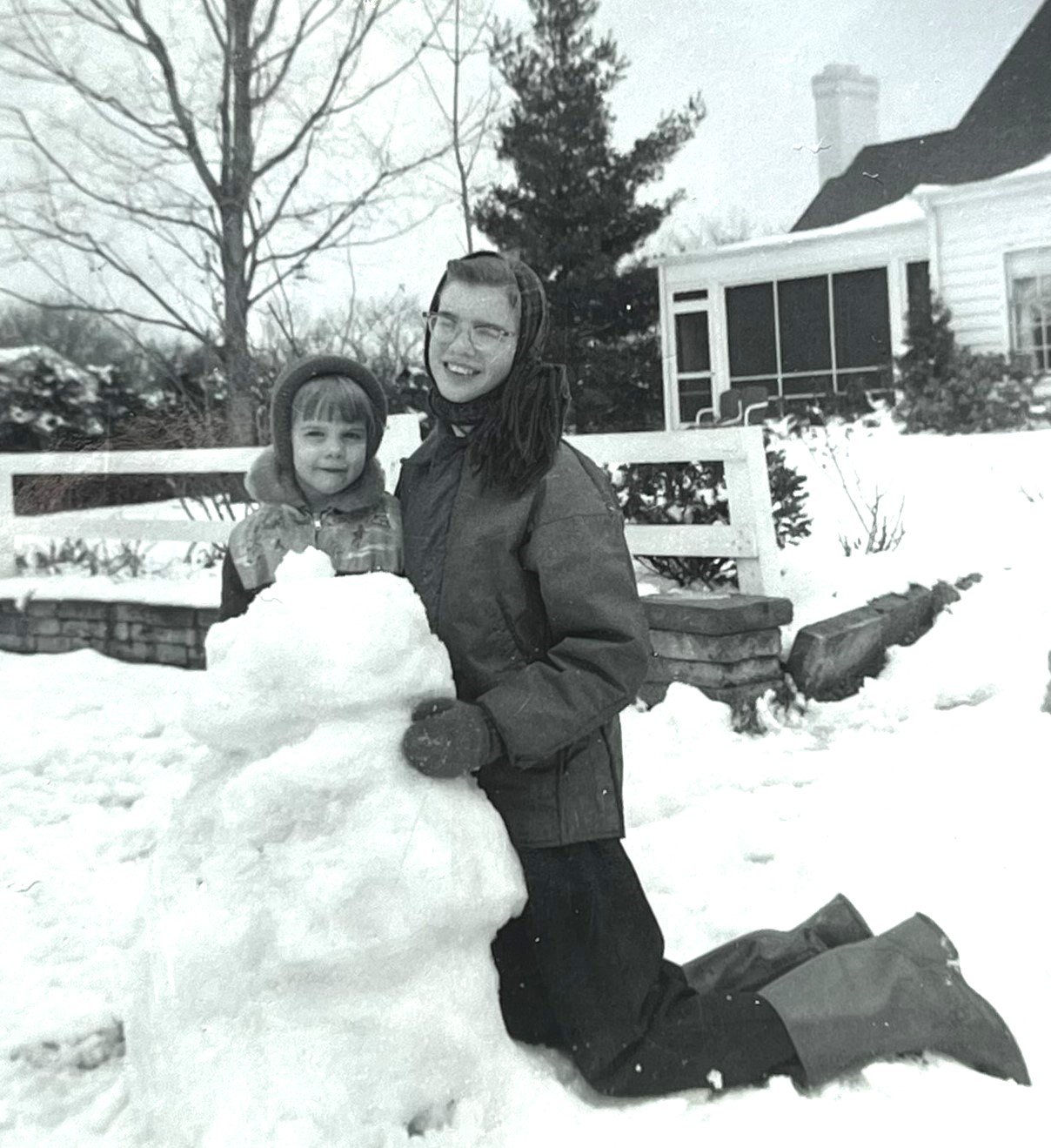
Chronos time vanishes in the wake of birth and death.  The day my mother died I entered the space of grief time where my world stopped while the rest of the world went on. How strange it seemed that other people went about their daily lives as if nothing significant had happened, if it were just an ordinary day. It was as if I’d stepped off the space/time continuum and was watching life on earth from afar. The same was true on the day my son was born, where my world closed in to only this time, this place, this love, with no cognizance of any life beyond this moment.  I’ve been able to create those spaces as well, on solo retreats where the days flow into each other and for a few days I am removed from the world, beholden to no clock and no one (except my dog). Snow days – those unexpected gifts from the snow goddesses where traffic stops; schools, stores, and workplaces close; events are cancelled -- grant us time simply for play – board games, sledding, building snowmen, playing fox and geese, and for hygge – the Scandinavian word that captures the essence of the coziness and conviviality of gathering under comforters, reading by the fire, and drinking hot cocoa while watching the snowflakes dance outside. It seems wrong that since schools learned how to rely on remote learning during the pandemic snow days have become “remote learning days” instead.  We need those unexpected gifts of time and space occasionally to grace our lives. As ecotheologian Mary DeJong has said, “Chronos time is needed to survive. Kairos time is needed to thrive.”

We don’t need to wait for life and the weather to grant us Kairos time.  We can choose to make it a regular practice.  We know it as “sabbath.” As practiced in Judaism, the weekly practice of Sabbath -- from sundown on Friday to sundown on Saturday -- is a time set aside from work, travel, devices, and screens.  Minister Wayne Muller, author of my favorite book on Sabbath, writes, “In Sabbath time we remember to celebrate what is beautiful and sacred; we light candles, sing songs, tell stories, eat, nap, and make love. It is a time to let our work, our lands, our animals lie fallow, to be nourished and refreshed” (7). Whether a day, a week, or a few moments at the beginning and end of the day, we can commit to setting aside Chronos time and its demands to enter Kairos time, fully present to the present moment. 

As I take time away from the news of continued death and destruction of war in Ukraine and Gaza, tensions in the Red Sea, mass shootings, the impending 2024 election -- I know my ability to insulate myself from that world for a time is a privilege not granted to those who are living  in the midst of it.  Yet I also know that taking regular sabbath time is an antidote to violence. As Muller writes, “Sabbath time . . . can invite a healing of this violence. . . . When we act from, a place of deep rest, we are more capable of cultivating what the Buddhists would call right understanding, right action, and right effort.  . . .Once people feel nourished and refreshed, they cannot help but be kind; just so, the world aches for the generosity of well-rested people” (5,7, 11).

The forecast is looking hopeful for an upcoming snow day.  Oh that we could grant the world a year of snow days, where all the world could, in the words of the mystic Rumi, “Come out of the circle of time, and into the circle of love.”


 Sources

DeJong, Mary. “Wild Autumn.” Waymarkers.

Muller, Wayne. 1999.  Sabbath: Restoring the Sacred Rhythm of Rest.  New York: Bantam.