“ . . . the admirable woman in her usual place in the wine-shop, knitting away assiduously. ‘You knit with great skill, madame.’ ‘I am accustomed to it.’ ‘A pretty pattern too!’ ‘You think so? Said madame, looking at him with a smile. ‘Decidely. May one ask what it is for?’ ‘Pastime,’ looking at him with a smile, while her fingers moved nimbly. . . . All the women knitted. . . . So much was closing around the women who sat knitting, knitting, that they their very selves were closing in around a structure yet unbuilt, where they were to sit knitting, knitting, counting dropping heads.”[i] - A Tale of Two Cities
So does Charles Dickens tell the tale of perhaps the most infamous resistance knitter, the character of Madame DeFarge in his A Tale of Two Cities. Using a different pattern of knots for each letter of the alphabet, Madame DeFarge uses her knitting to encode the names of spies and traitors to be beheaded by guillotine in the French Revolution’s Reign of Terror.
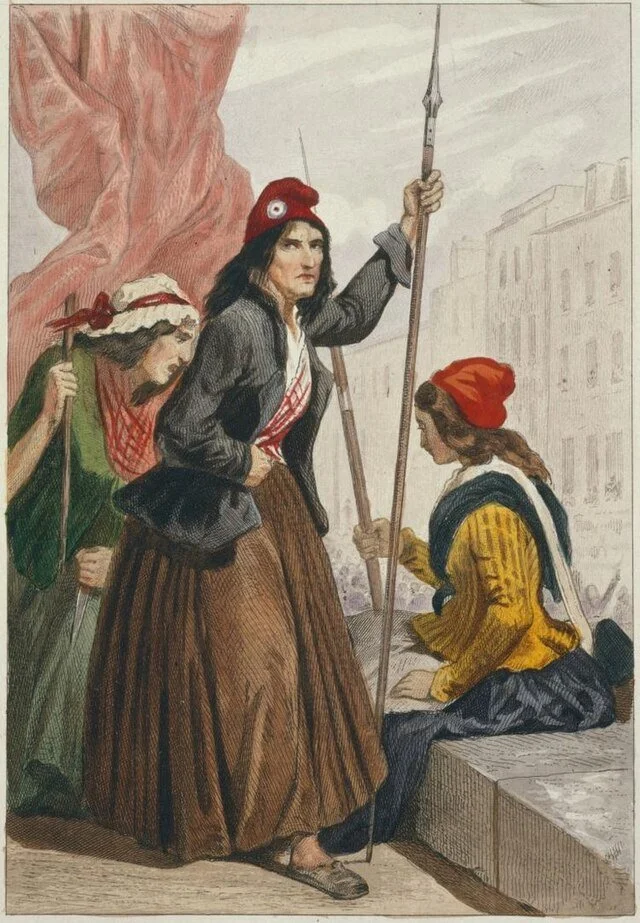
Les Tricoteuse
Her character is based on the true story of the tricoteuse – the women who notoriously knitted while sitting next to the guillotine. They undoubtedly took up this public position because on May 21, 1793, just a few months before the Reign of Terror began, they were banned from government proceedings and then prohibited from forming any political assembly. Initially praised for their role in the resistance after successfully forcing Louis XVI to acquiesce to their demands following their march on the palace at Versailles protesting rising food prices, they had become too much of a threat to the aristocrats whom they harassed on the streets. It is said they were knitting liberty hats.
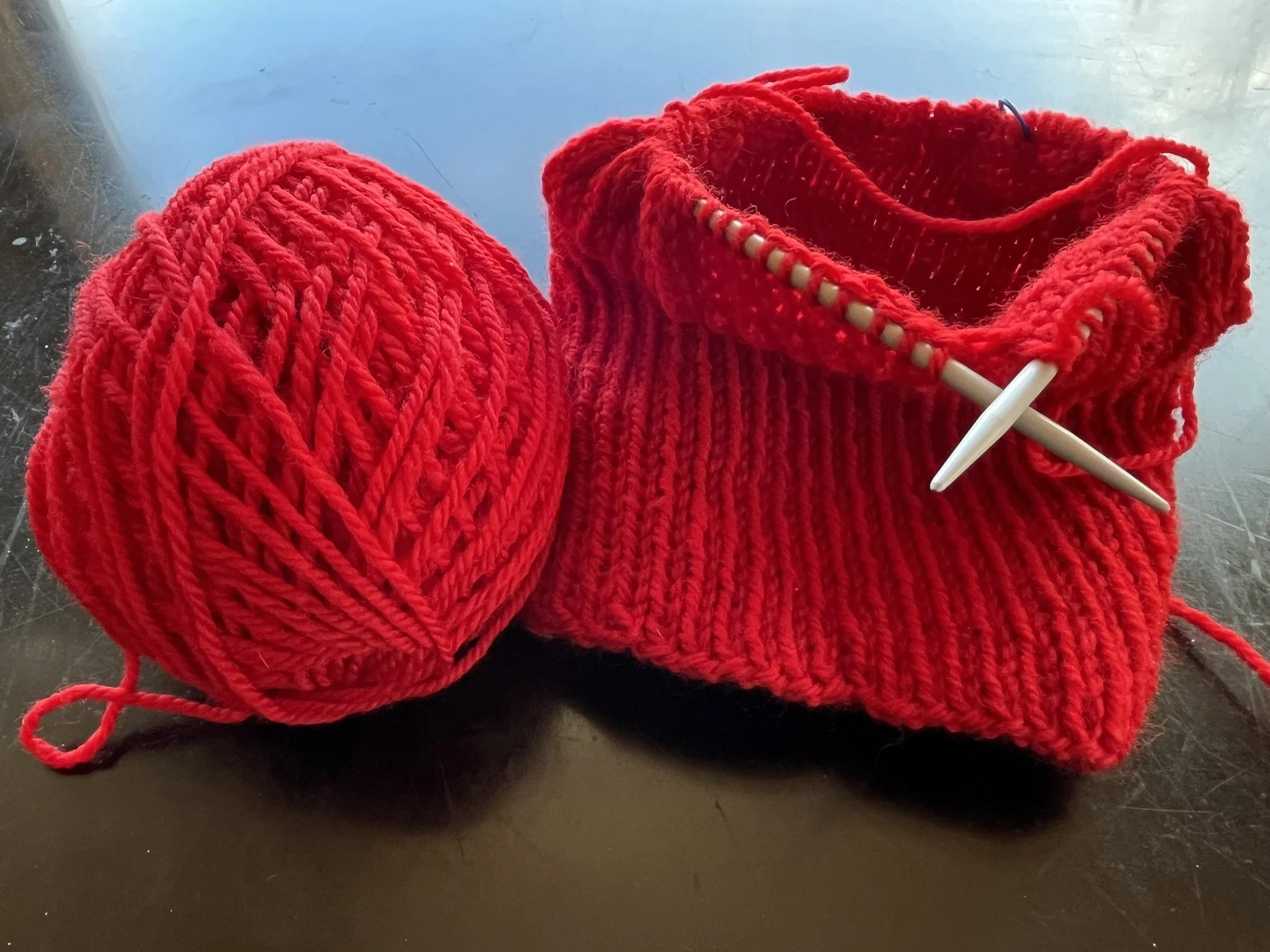
Fast forward to today. Begun with a simple “Melt the Ice” pattern designed by Paul Neary from the yarn shop in Minneapolis, Needle & Skein, women and men all over the world are once again knitting liberty hats. The red pointed hats are modeled after the nisselue -- or “Santa hat” — that Norwegian women knit as a symbol of resistance to the Nazis who were occupying Norway during WW II. Needle & Skein made the pattern available for $5, with proceeds going to support rent and food assistance to those unable to leave their homes due to ICE’s ongoing presence in the Twin Cities. As of March 5, they had already raised $705,000.
That the movement has become worldwide is extremely moving to those of us in Minnesota. It lets us know we are not alone. It has become a sisterhood of sorts, with a continual round of Facebook messages like this one from Elisabet Engström, “I am knitting the Melt the Ice hat right now. . . . It feels so good to be a part of this. I live in Sweden. Happy knitting to all of you.” Another writes from Ibaraki, Japan, that has a cultural exchange program with Minneapolis, that she is knitting MTI hats “in solidarity and support.”[ii] I particularly loved this one, “I changed the pattern a bit, but I’m loving the resistance and how much it’s already earned for donation. I’m 82 and can no longer march, but I can do this.”[iii]
These days, at every protest I attend and just walking around town, I see people, mostly women, wearing the red Melt the Ice hats. There’s something particularly fortifying about wearing one’s convictions so visibly in solidarity with others doing the same. On the 84th anniversary of the Naz’s banning the wearing of the nisselue hats, people all around the world wore the red MTI hats they had inspired, proudly displaying their resistance to the occupation forces of ICE that have terrorized cities and immigrant communities throughout the US.
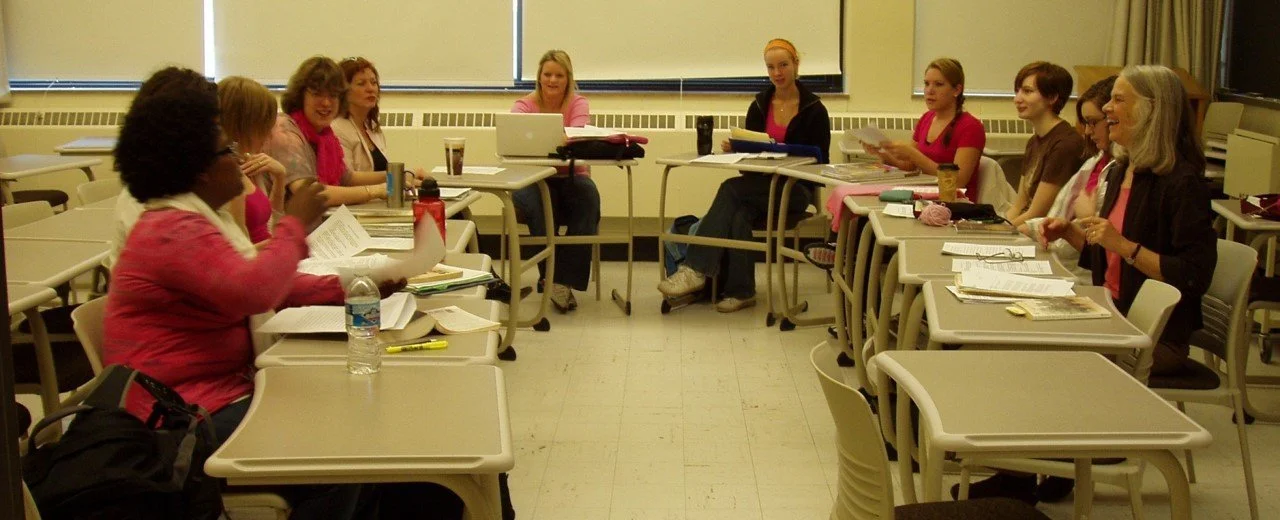
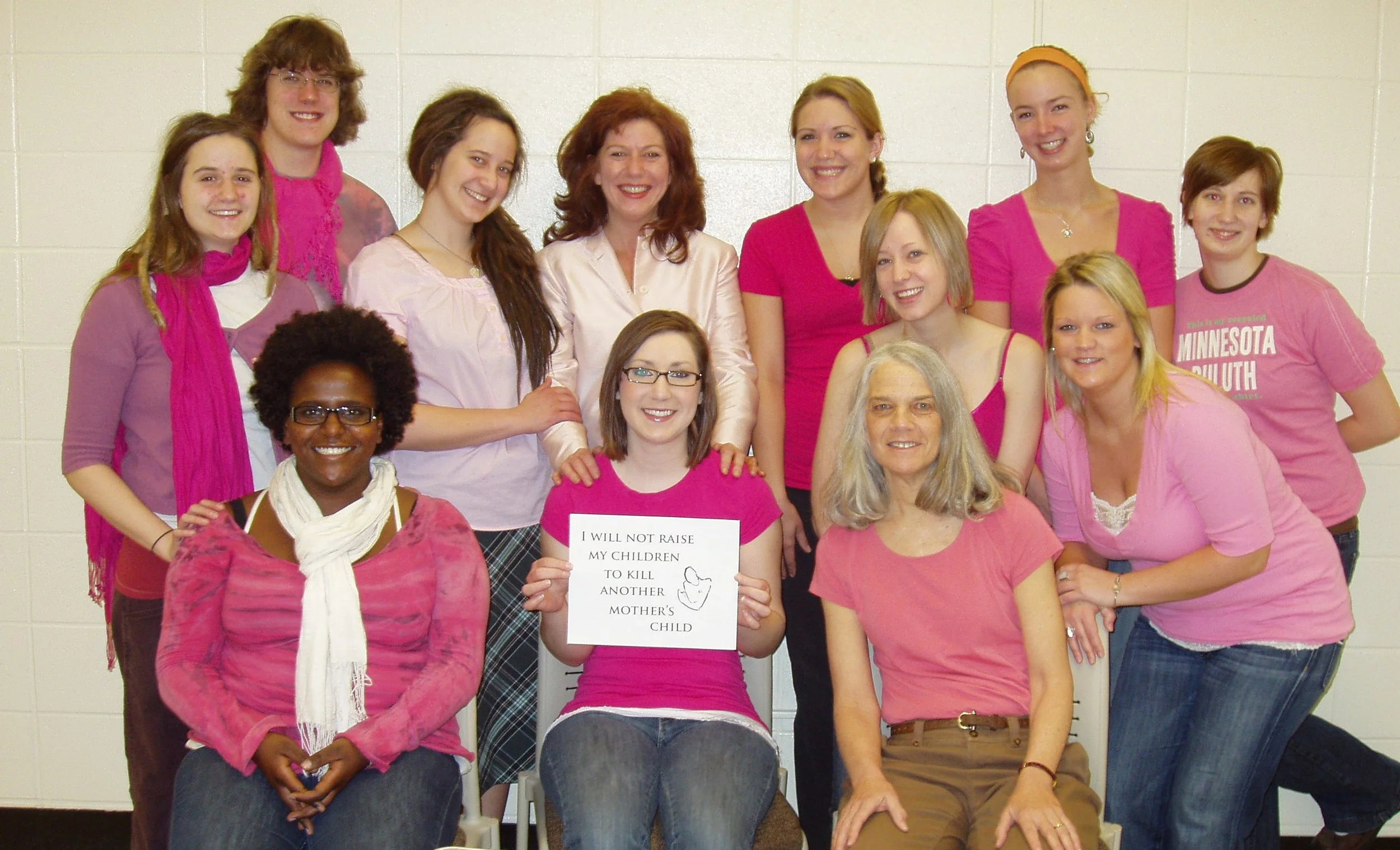
I first engaged in knitting resistance in 2009 when students in my course, “Women, Peace, and War” participated in CodePink’s Mother’s Day action against war, displaying a banner on the White House fence with the words, “We will not raise our children to kill another mother’s child.” CodePink sent out requests for 4X4 tightly knit squares in pink yarn, and so we began to knit. Many of the students already knew how to knit. We taught those who did not. Most class sessions we were all busily knitting while discussing the readings on women’s roles in war and peace, and by the due date sent in a few dozen squares and the accompanying photo. It was a wonderful exercise in activist engagement that also brought us together as a community in the classroom and with other anti-war feminist activists throughout the country.
Many people first engaged in knitting resistance when Kat Coyle of Ravelry – the social group for knitters and crocheters – created a pattern for the “pussy hat”[iv] – a symbol of resistance to Donald Trump worn in the first Women’s March following his inauguration in 2017. The streets in Washington, DC and other cities across the country were filled with pink pussy hats.
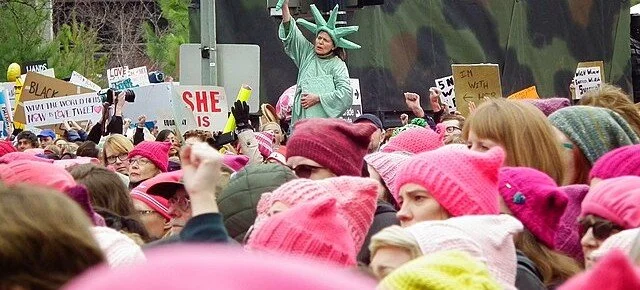
Women’s March 2016 Washington, D.C.
These are just a few of the hundreds of ways knitting and other crafts have been used in resistance to oppression, tyranny, violence, and war. In 2003, Betsy Good coined “craftivism” – a combination of “craft” and “activism” – to describe this worldwide movement.[v] As one craftivist described it, craftivism is “a strategy for non-violent activism in the mode of do-it-yourself citizenship or do-it-together citizenship’.”[vi] Craftivist and author Sarah Corbette wrote, “To be a craftivist is not just to be someone who likes craft: it is to be someone who hones their craft to question injustice, encourage peace and show ways to achieve a better world for everybody involved.”[vii]
Craftivism includes all forms of fiber and needle arts – from knitting and crocheting to embroidery and quilting and more. Quilting has a long history of being used as a form of protest and activism -- from the use of quilts encoded with messages about the underground railroad and its resurgence as a medium for resistance during the Civil Rights movement to the AIDS memorial quilt.[viii] Other famous resistance quilts include The Border Wall Quilt Project, a collection of 8” x 16” quilt pieces expressing concern about the border wall and the Broken Treaty quilts, created by Gina Adams, with texts taken from treaties to demonstrate the broken promises and injustices to indigenous peoples.
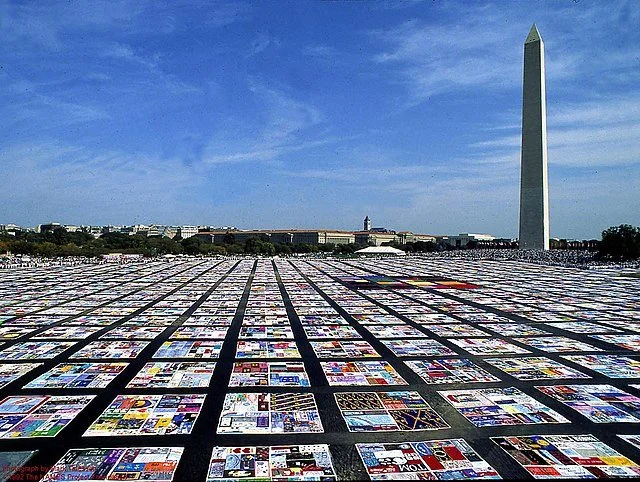
AIDS quilt on the National Mall
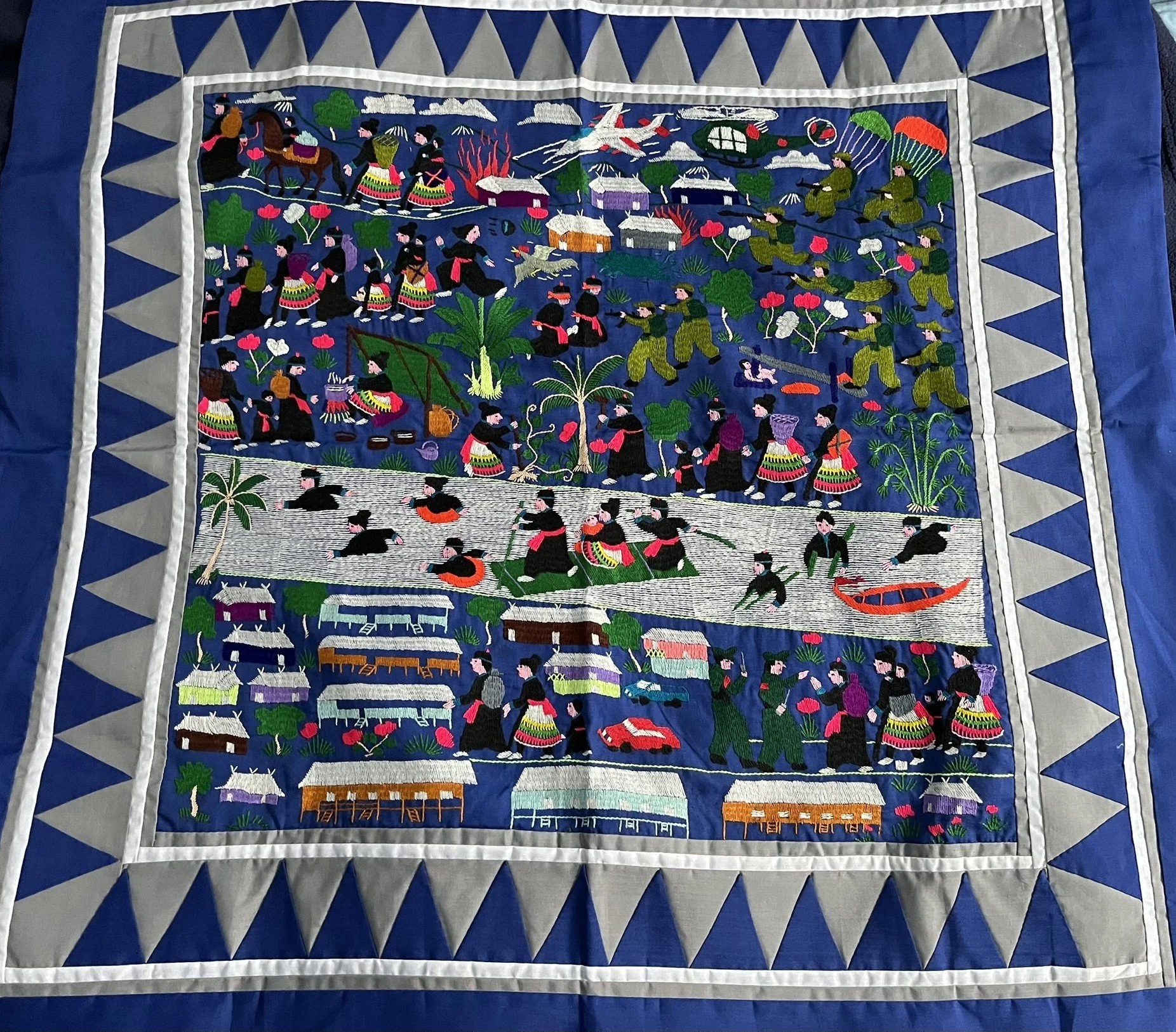
Hmong story cloth
Embroidery also has long been used as a form of resistance,[ix] from suffragists’ embroidered banners for votes for women to the embroidered arpilleras of women in Chile to document human rights abuses during Pinochet’s regime, the embroidery of Zapatistas in Chiapas, Mexico used to champion women’s rights and a rejection of global capitalism, and that of Hmong women in refugee camps created to depict the horrors they experienced in the war in Laos.
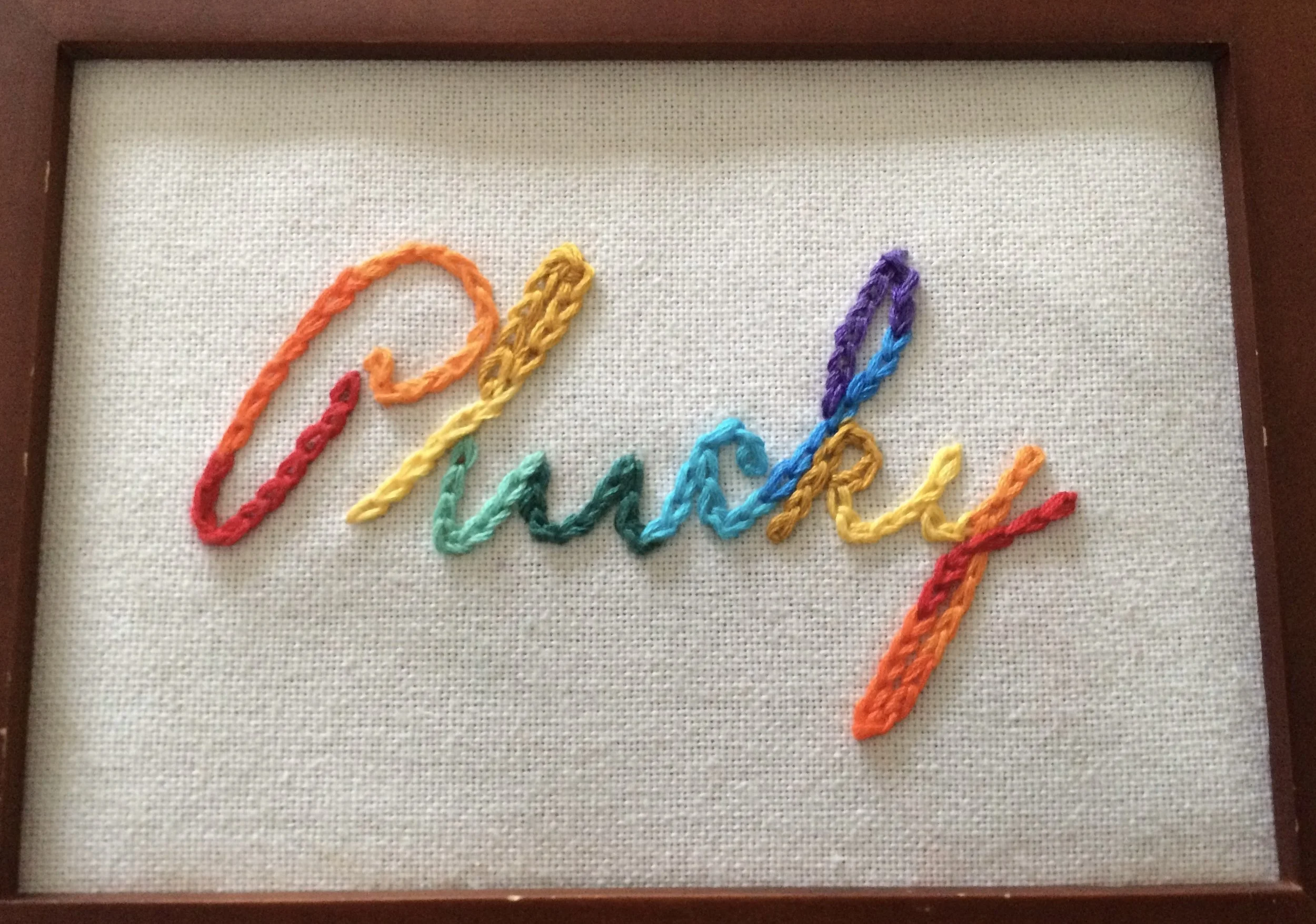
Sarah Corbette wrote about how she has used embroidery to give messages to elected officials that were more likely to gain the officials’ attention than a letter or phone call. She also gave embroidered gifts to officials to encourage them in their work. I’ve done this as well. When we elected our first woman mayor, I gave her a framed embroidered piece with the word “plucky” on it – the word she’d told me that encouraged her to go ahead with her campaign.[x]
Textiles in one form or another have featured prominently in resistance movements – from women in revolutionary America and women and men in pre-independence India weaving homespun in resistance to British rule, to African American artists Betye and Alison Saar using cotton in their assemblages to demonstrate the inhumanity of slavery, to Sonya Clark’s performance installation Unraveling (2015-ongoing), in which she dismantles a Confederate flag piece by piece in front of an audience.
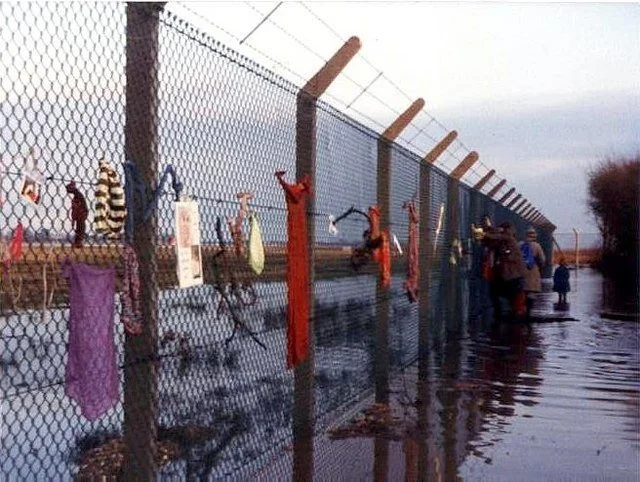
Greenham Common Perimeter Fence
But the craft that has currently engaged so many is knitting. Knitting has featured prominently in anti-war resistance, such as the aforementioned CodePink banner. Knitting was central to resistance workers in France and Belgium during both WW I and WW II, knitting secret messages into scarves and mittens and sweaters, using knit and purl stitches to represent dots and dashes in Morse Code, or dropping stitches in strategic places to represent witnessing German train activity. Women knitted themselves into webs during anti-nuclear protests at Greenham Common in the 1980s and decorated the perimeter fence around the air base with ribbons and knit items. The British “Cast Off Knitting Club” knit grenade purses to protest the Iraq War and in the US Starhawk and fellow protestors created a yarn web around the Pentagon.
Knitting has been used as a form of protest for countless other causes as well. Suffragists in the US knit, sewed, and embroidered banners with declarations of women’s right to vote. During the pandemic, Canadians engaged in the “Stitching the Curve” project, knitting Covid-19 data for each Canadian province into banners. The “Tempestry” project was begun in 2016 in response to concerns that the incoming Trump administration would minimize climate data. Participants knit ‘temperature scarves’ with specific color-coding to record climate change data in various places in the US.[xi] The “Liberty Crochet Mural” – consisting of 40 individual crocheted squares assembled into a 17ft x 11ft yarn mural -- celebrates women’s reproductive autonomy and freedom to choose. In the “Welcome Blanket” project -- a response to the first Trump administration’s proposed 2,000-mile wall along the United States–Mexico border, Los Angeles artist Jayne Zweiman and dozens of other fiber artists knit, sewed, crocheted, and wove 3,500,640 yards of blankets to welcome immigrants.[xii] And the Minnesota MTI hat is not the only anti-ICE knitting project. In Portland, Tracy Wright formed “Knitters Against Fascism,” which designed and promoted the Portland frog hat and conducts “knit-ins” outside the Portland ICE facility.[xiii]
Knitting and other forms of needlework made a resurgence when Second Wave feminism reclaimed traditional “women’s work” as a form of feminist expression, promoting crafting as a tool of feminist empowerment. The most prominent example of this was Judy Chicago’s 1979 The Dinner Party that celebrated prominent female historical and mythical figures. A massive artwork, it consists of 539 quilted triangle pieces from all over the world, embroidered place banners, and ceramic plates arranged on a large triangular table.
Women form the vast majority of those engaged in knitting resistance,[xiv] and beyond the reclamation of women’s domestic arts, craftivism provides women a voice that is often usurped and talked over in masculine political spaces. As one of the participants in a resistance knitting circle that was studied by feminist scholars stated, “’Because politics is still very sexist and configured for men . . . I think women don’t get very far . . . I think craftivism is . . . something that’s accessible to women . . . and is an alternative form of expression.”[xv]
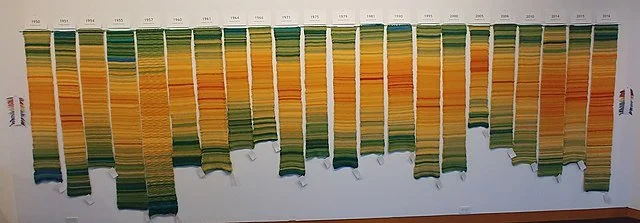
Tempestry Project
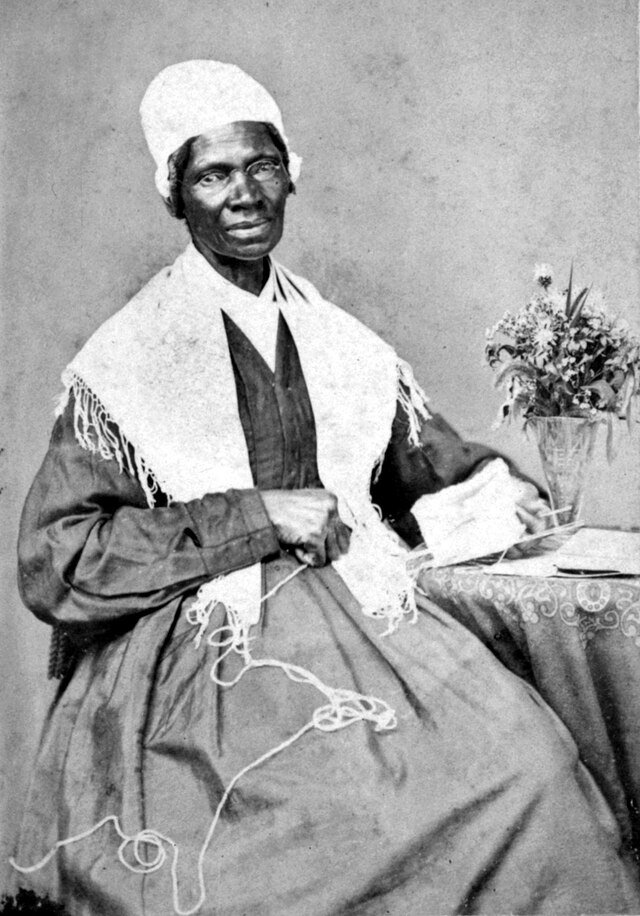
Sojourner Truth
Knitting as a form of resistance has been criticized as being a “white women” project, primarily due to the predominance of white women in knitting magazines, patterns, and posters, but Black women in particular have made efforts to correct that notion. The famous 19th century feminist activist Sojourner Truth insisted on holding her knitting in portraits taken of her to show the importance of knitting which she regarded as a crucial skill, one she taught to formerly enslaved women to provide self-sufficiency and empowerment. The Yarn Mission, formed by CheyOnna Sewell in St. Louis in 2014 in response to police violence after Ferguson, is centered around knitting for Black Liberation but with an intersectional lens, emphasizing justice and anti-oppression resistance for all marginalized people.[xvi] “Is knitting traditionally a white activity?” questioned Sewell. “Absolutely not. Knitting has often been a tool for sustainability and survival. A way to stay warm. A way to comfort and protect our loved ones. This has been true for many cultures.”[xvii] “As a black woman, you’re invisible,” said Yarn Mission member Taylor Payne to Sarah Kendzior, a Guardian reporter. “But knitting makes people stop and have a conversation with you. If someone asks me what I’m doing, I say, ‘I’m knitting for black liberation,’” -- creating an opening for dialogue about race and racism that other forms of activism do not.
What is the specific appeal of knitting as a form of activism? Sarah Corbette most famously defined knitting and other craftivism as a form of “gentle protest.” After engaging in activism for years, she felt burnt-out. “I didn’t like shouting, demonizing people or telling people what to do . . . stitching calmed me down, . . . “ [xviii] She continued, “We need to stop seeing protest as only being about shouting in a crowd and start having the kind of smaller conversations that actually connect to fellow human beings and help to influence them gently . . . and with kindness, decency, and thoughfulness.” [xix] Knitting resisters also contend that this form of protest is more effective. “You don’t change your mind if somebody comes and shouts in your face,” said one knitter, “your minds change with conversation, discussion and calm debate. That’s what I’m trying to do . . . and I think that’s true to a lot of craftivism that I’ve seen.”[xx]
The calming influence Corbette mentioned has been an important part of knitting resistance. The women who participate in the Yarn Mission credit knitting as a form of activism that helps relieve the stress of daily racism and acts as a solace for their community still wounded by police violence. Similarly, a friend, writing about her discomfort with conflict and dissent while also recognizing that it is an integral part of creating change wrote, “Having a crochet project in hand is my strategy for metabolizing that discomfort instead of getting reactive.”[xxi] And this is the case not only for the knitters but also for those witnessing them. As reported by the Duluth Monitor after a particularly contentious City Council meeting: “Amid the deteriorating circus of Duluth City Council meetings, pockets of civilization still remain. At yesterday's meeting, as speakers came and went and two men nearly came to blows in the back of the room, the steady movements of knitting hands exerted a calming influence on the room.”
Knitting resistance does far more than create calm and artifacts and symbols of resistance and protest. It knits together the fabric of communities of resistance. As Corbette wrote, “Making the same thing together and struggling together . . . helps create a sense of community. . . .”[xxii] Over and over again, knitting resisters talk about the act of knitting resistance projects together – whether in the same room, in collectives, or in far-flung internet communities – as creating connection and, in Corbette’s words, “. . . a sense of common purpose, bigger than ourselves, a sense of solidarity and reminder that we are not alone in our fight to eradicate unloving practices in our world.”[xxiii] Those researching the Pussyhat Project similarly noted the sense of solidarity in the way participants talked about their involvement: “The pronoun ‘we’ appears in every sentence on the homepage . . . ‘We are crafters’; ‘We are a Worldwide Movement’; ‘We support women’s rights’; ‘We did it! We created a sea of pink!’”[xxiv] Chloe, one of the women interviewed in the knitting circle said, “’It does feel like it’s a collaborative form of protest rather than a . . . male anger form of protest. . . . I feel it is a very female way of going about things. . . “[xxv], and I think that’s true . . . [of] a lot of craftivism that I’ve seen.” And as one of the other knitters, Abby, noted, ‘Feeling like a small part of something larger is really an important aspect of it . . .That’s where the power of it is . . . It’s that coming together with others.’”[xxvi] As I knit Melt the Ice hats, I have felt that same sense of solidarity with all of us knitting MTI hats as we post problems, solutions, and variations on Facebook and other social platforms; as we collectively created the shortage of red yarn; as I’ve gifted the hats to friends; and as I look out at the many of us wearing red hats at protests and around town.
In surprising and perhaps unseen ways, the collective combined efforts of small acts of individual knitters have created compelling and profound resistance movements. “People consistently underestimate the power of knitting. They don’t recognize its radical properties,” said Sewell.[xxvii] Ultimately, knitting resisters regard this form of activism as being motivated by an unconditional love for the cause, whatever it may be, for humanity and earth, and for each other. Said one of the Pussyhat knitters, “The way in which this project connected human hearts was amazing. Love is the most powerful thing on earth.’ “[xxviii] Just as I was about to post this, this quote came across my feed: " Some folks question the validity of creating MTI resistance hats; wrong color, not ‘authentic’ version, wearing one makes you a ‘target’ etc. . . . My thoughts go to the intention behind the process; my version averages 80+ rows x 104 stitches… that’s 8320 stitches per hat focused on a better, safer America. 15 hats = 124800 stitches of hope and love for America’s healing.”[xxix] And so, with needles and yarn we knit together our hearts, our lives, our resistance – making the world better with each stitch.
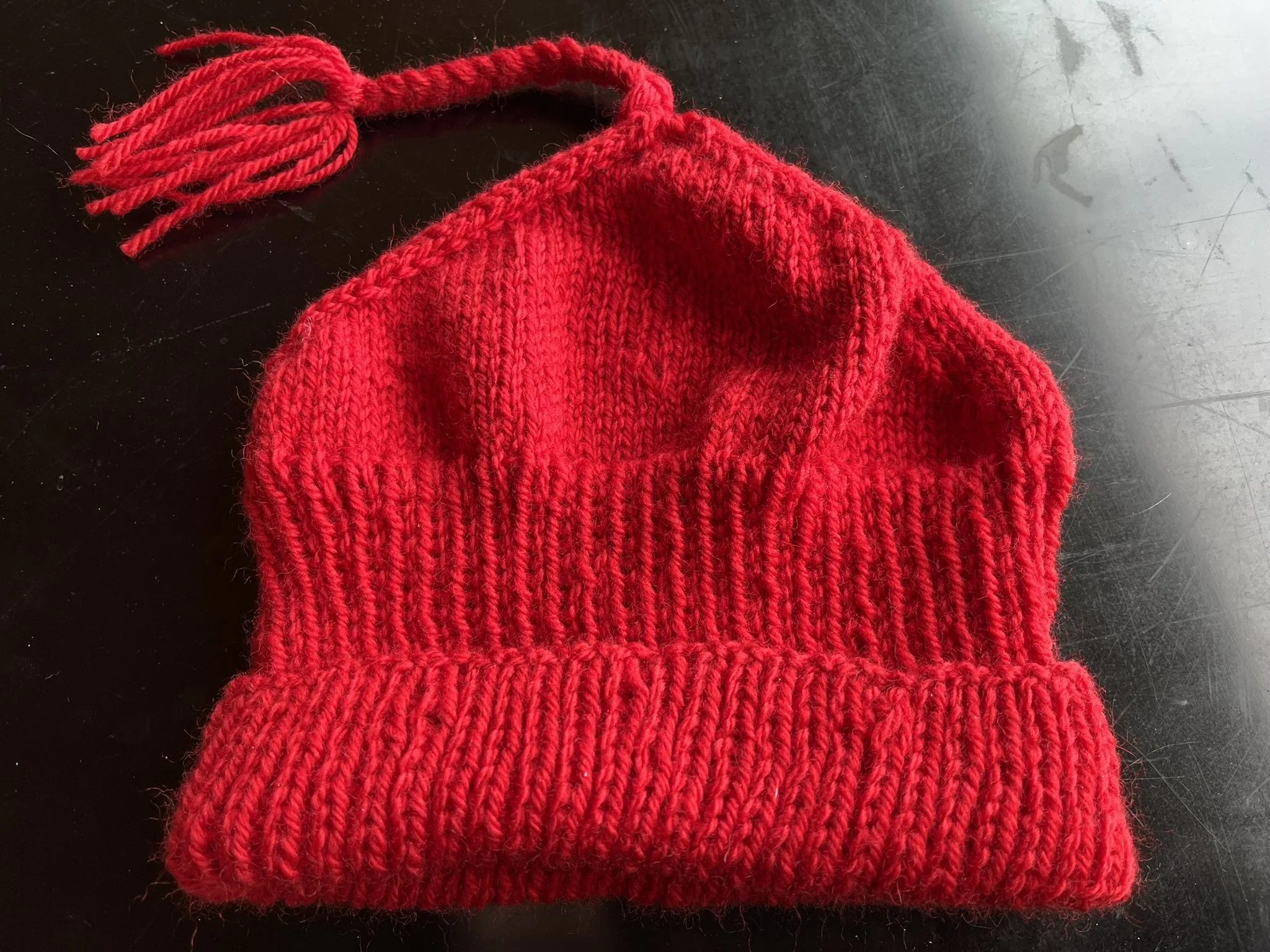
Melt the Ice Hat
Note: The Melt the Ice Project is ongoing and the Twin Cities are still under siege by ICE. To support or participate, see Melt the ICE Hat | Needle and Skein.
Sources
CODEPINK. Collecting Knitted Squares For Mother’s Day. – craftivism.
Corbette, Sarah P. How to Be a Craftivist: The art of gentle protest. Unbound. 2018.
Craftivism: Empowerment, Resistance, and Activism Through History - The Morning Crafter
craftivism. – craft + activism = craftivism.
Crafty Wartime Spies Put Codes Right Into Their Knitting | HowStuffWorks
Dickens, Charles. A Tale of Two Cities. The Works of Charles Dickens. Vol XIII. New York: Peter Fenelon Collier, Publishers. 1910.
Duluth Monitor, February 24 at 7:46 PM.
Ellis, Corinne Freedman. Facebook post. 2/25/26.
Engström, Elisabet, Ravelry Facebook post. 2/20/26.
Full Service Yarn Shop in St. Louis Park, MN | Needle & Skein
Greer, Betsy, ed. Craftivism: The Art of Craft and Activism. Vancouver: Arsenal Pulp Press, 2014.
Henderson, P.L. Unravelling Women’s Art: Creators, Rebels & Innovators in Textile Arts. Richmond, UK: Supernova Books, 2021.
How Knitting Enthusiasts Are Using Their Craft to Visualize Climate Change
Knitting, Codes, and Espionage Through the Ages – Tim O'Neill Studio
Knitting as Resistance - Reformed Journal
Laware, Margaret L. “Circling the Missiles and Staining Them Red: Feminist Rhetorical Invention and Strategies of Resistance at the Women's Peace Camp at Greenham Common.” NWSA Journal, Vol. 16, No. 3 (Autumn, 2004), pp. 18-41.
Literat, Iona and Sandra Marku. “‘Crafting a way forward’: online participation, craftivism and civic engagement in Ravelry’s Pussyhat Project group.” Information, Communication & Society 2020, VOL. 23, NO. 10, 1411–1426 https://doi.org/10.1080/1369118X.2019.157391.
Literary Hub » On the Covert Role of Knitting During the French Revolution and World War II
Mikki, Ellen Rettig. Ravelry Facebook post. 3/2/25.
Moreshead, Abigail & Anastasia Salter. “Knitting the in_visible: data-driven craftivism as feminist resistance,” Journal of Gender Studies (2023) 32:8, 875-886, DOI: 10.1080/09589236.2023.2258068.
O’Neill, E. (2022). Knitting: The Destructive Yarn-Bomb. TEXTILE, 1–10. https://doi.org/10.1080/14759756.2022.2138062
Parnell, Julia Arthur. 50501 Project Washington Facebook post, 3/5/26.
Steele, Bonnie Leigh. Ravelry Facebook post. 2/24/26.
The Politics of the Handmade. How fiber arts are powering modern… | by Amanda Varley | Feb, 2026 | MediumCraftivism: The History of Arts as Social & Political Dissent – Thread and Maple.
The Yarn Mission | The Yarn Mission knits for Black Liberation.
Vachhani, Sheena J., Emma Bell, and Alexandra Bristow. “The Affective Micropolitics of Craftivism: Organizing social change through minor gesture.” Organization Studies 2025, Vol. 46(4) 525 –547.
* Photo Credits: AIDS quilt: Public Domain; The Dinner Party: Donald Woodman, Wikimedia Commons; 2017 Women’s Marc: Creative Commons; Sojourner Truth: Public Domain; Greenham Common: Creative Commons; Tempestry Project: Creative Commons; Les Tricoteuse: Public Domain.
[i] Dickens, 200, 201, & 207.
[ii] Rettig.
[iii] Steele.
[iv] The “pussy hat” was inspired as a protest against Trump’s infamous statement in a 2005 tape, “When you’re a star, they let you do it. Grab them by the pussy. You can do anything.”
[v] The term “craftivism” is usually attributed to Betsy Greer, but she actually coined the term when after she mentioned a connection between craft and activism, “Buzz,” one of the women in her knitting circle, said, “You could call it craftivism.” Greer then posted it on her online journal in 2000, and in 2003 bought domain named craftivism.com, which has become a worldwide network of craftivists.
[vi] “Deb” in Vachhani, 533.
[vii][vii] Corbett, 304.
[viii] Evidence suggests that quilt patterns such as the “Log Cabin” or “Flying Geese” may have been used in the Underground Railroad to provide coded messages to guide enslaved people to freedom. Women in the Civil Rights movement organized quilting circles as a form of resistance. The quilts made during the Civil Rights movement were often sold to raise funds for the movement. The AIDS memorial quilt originated in San Francisco in 1985 to memorialize those lost to AIDS. Gert McMullin, the ‘mother’ of the quilt, sewed the first stitch and since then 50,000 panels have been added, honoring more than 110,000 individuals. Weighing 54, it is thought to be the largest community art project ever created. It has raised more than $3 million dollars for AIDS services.
[ix] See Rozsika Parker’s The Subversive Stitch for a detailed history of the use of needlework in resistance movements.
[x] ‘Plucky’ -- meaning, courageous, spirited, brave, daring. The mayor, Emily Larson, had heard me reference the word to describe the quality of feminists in Duluth in a speech I’d given that she’d attended.
[xi] The Tempestry Project is ongoing. To learn more or participate, see Tempestry Project – Your access to climate change data in a wearable and comfortable fashion, preserved for years to come..
[xii] The project quickly exceeded its goal and aims to encircle the globe in 36,521 handmade pieces. 8,000 have been collected so far. To learn more or participate, see Welcome Blanket
[xiii] The proceeds from the sale of the pattern have raised $500 for local food shelves.
[xiv] The Amazon analytics service that provides internet traffic data shows the gender split of Ravelry is around 98% female and 2% male. They also show that the participants tend to be older than the average population.
[xv] Fiona, in Vachhani, 533.
[xvi] She formed a second chapter in Minneapolis in 2015.
[xvii] “Ferguson’s Radical Knitters.” The Guardian.
[xviii] Corbette, 5.
[xix] Corbette, 35 & 44.
[xx] Chloe, in Vachhani, 533.
[xxi] Ellis.
[xxii] Corbette, 90.
[xxiii] Corbett, 92.
[xxiv] Literat, 1421.
[xxv] Vachhani, 533-34.
[xxvi] Ibid., 535.
[xxvii] “Ferguson’s Radical Knitters.” The Guarian.
[xxviii] Literat, 1419.
[xxix] Parnell.