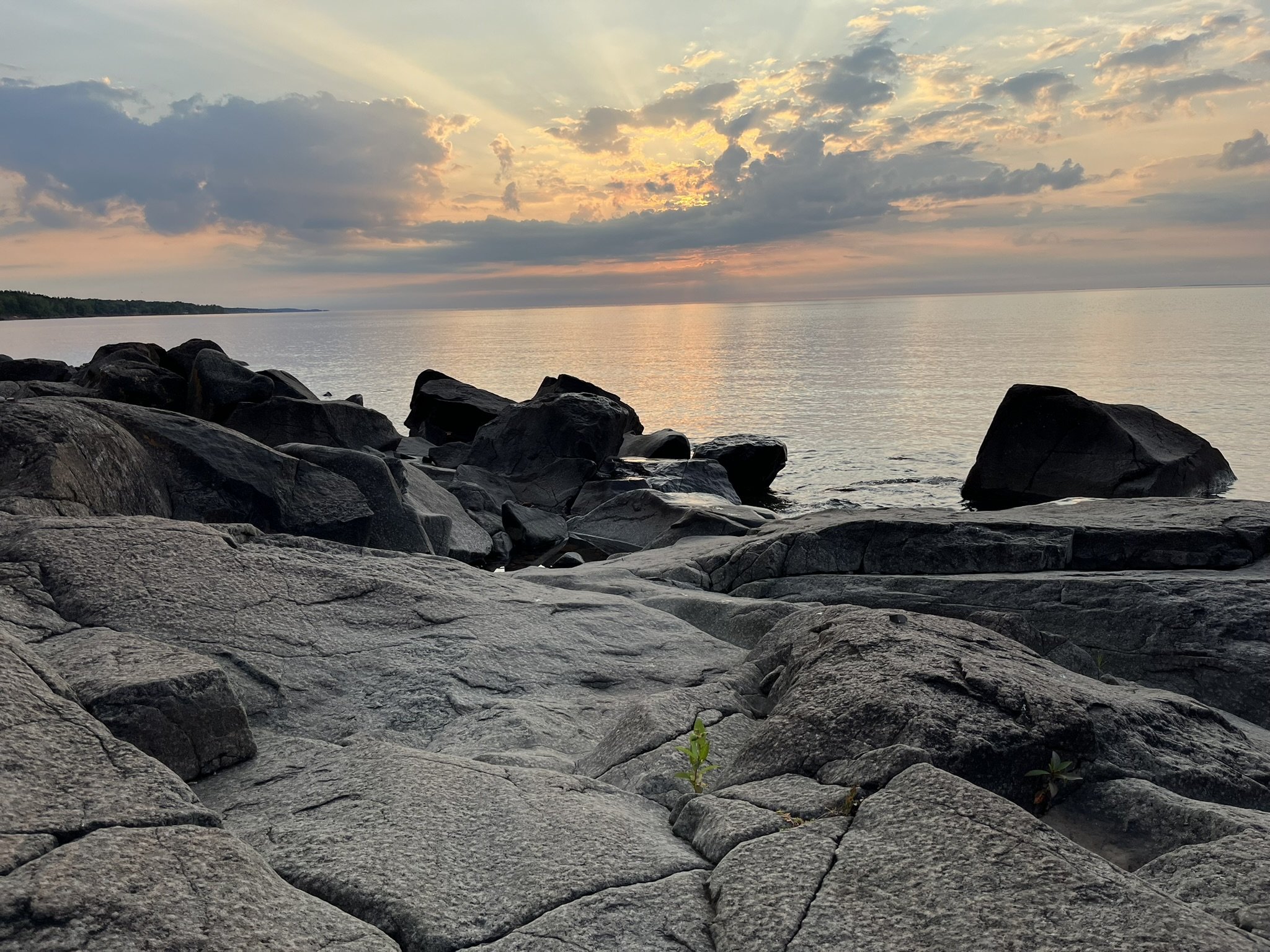
A stone is a thought that the earth develops over inhuman time.
- Louise Erdrich
“It’s only a bunch of rocks!” said the man sitting in front of me. We were at a public hearing regarding putting in a “safe harbor” marina on a beloved stretch of rocky beach on the edge of town. The man clearly was in favor of building the marina at that spot, which would require blasting apart those rocks, destroying a billion-year-old landscape in a matter of seconds. I, on the other hand, was there to voice my objection. “Only a bunch of rocks!” I thought to myself. “Those rocks have been her for millennia. They are some of the oldest rocks in the world. They deserve our veneration and respect. Oh, the wisdom they must hold.”
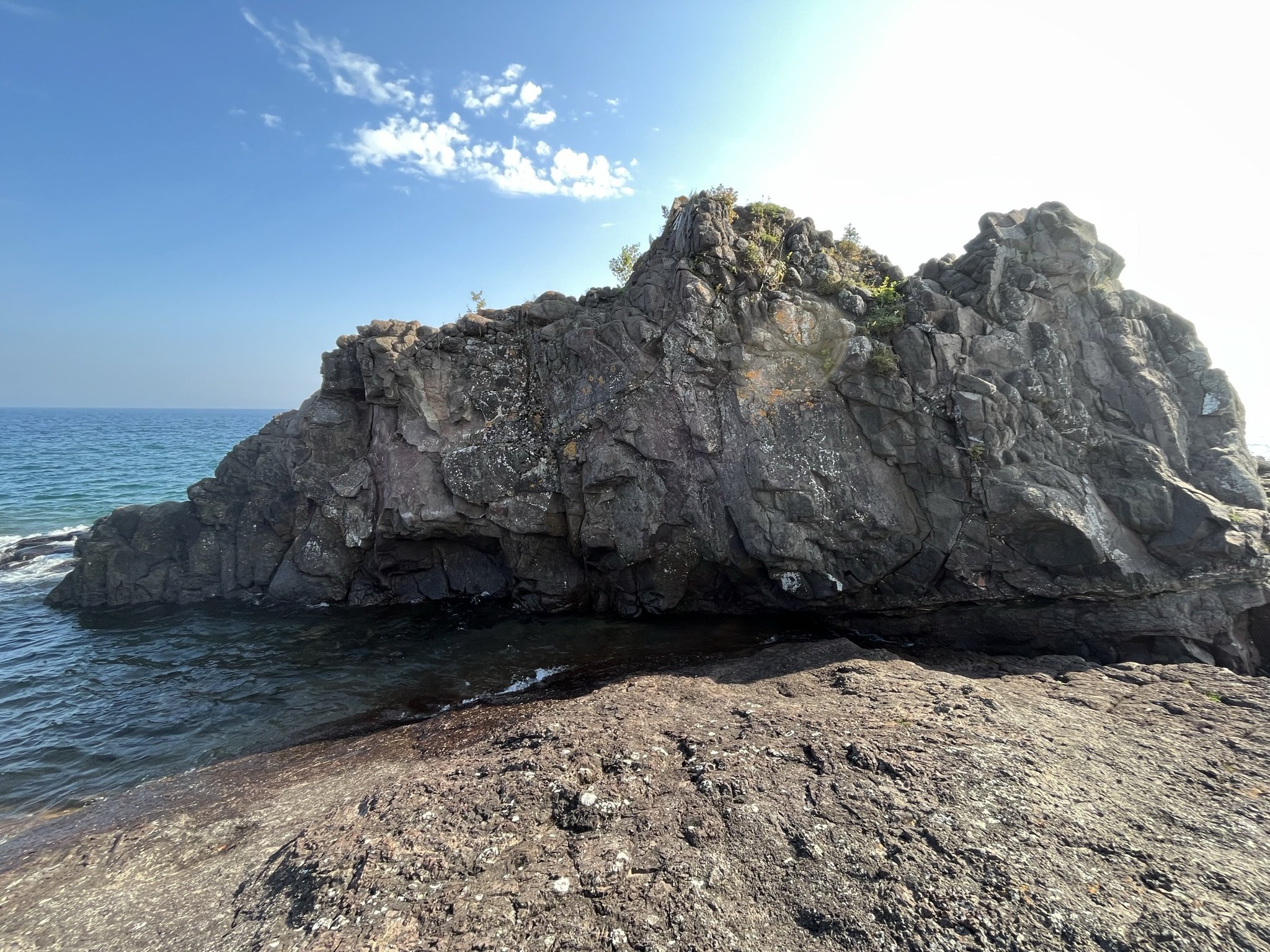
These rocks, bedrock really, made of basalt formed from lava, are part of the “geologic basement” known as the Canadian Shield and are among the oldest exposed bedrock in the world -- 2.5. billion years old. As the writers of the quintessential book on Lake Superior’s north shore wrote, “To stand on the shore edge, then, is to step back into ancient time.”[i] How can one not be humbled by that?
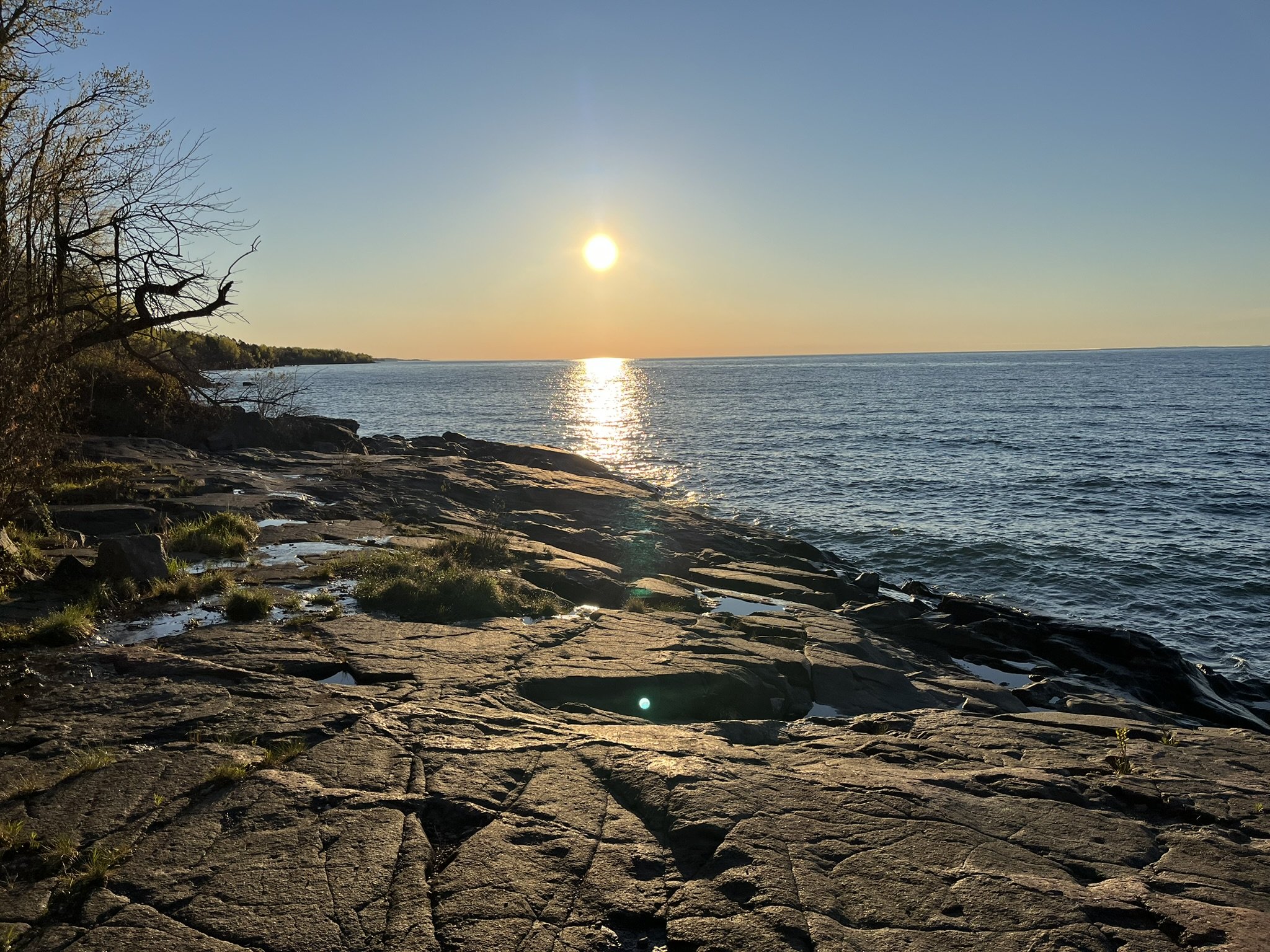
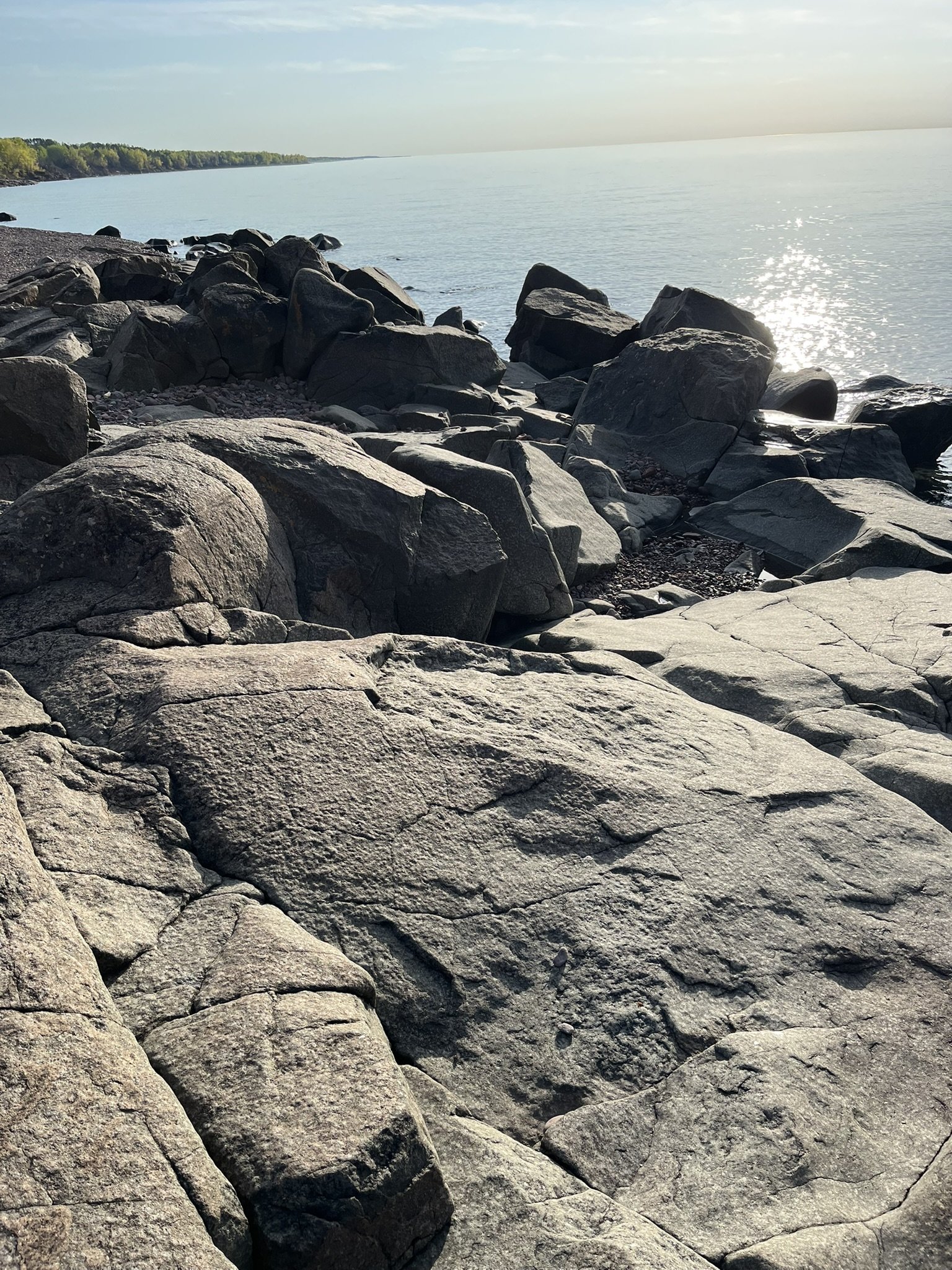
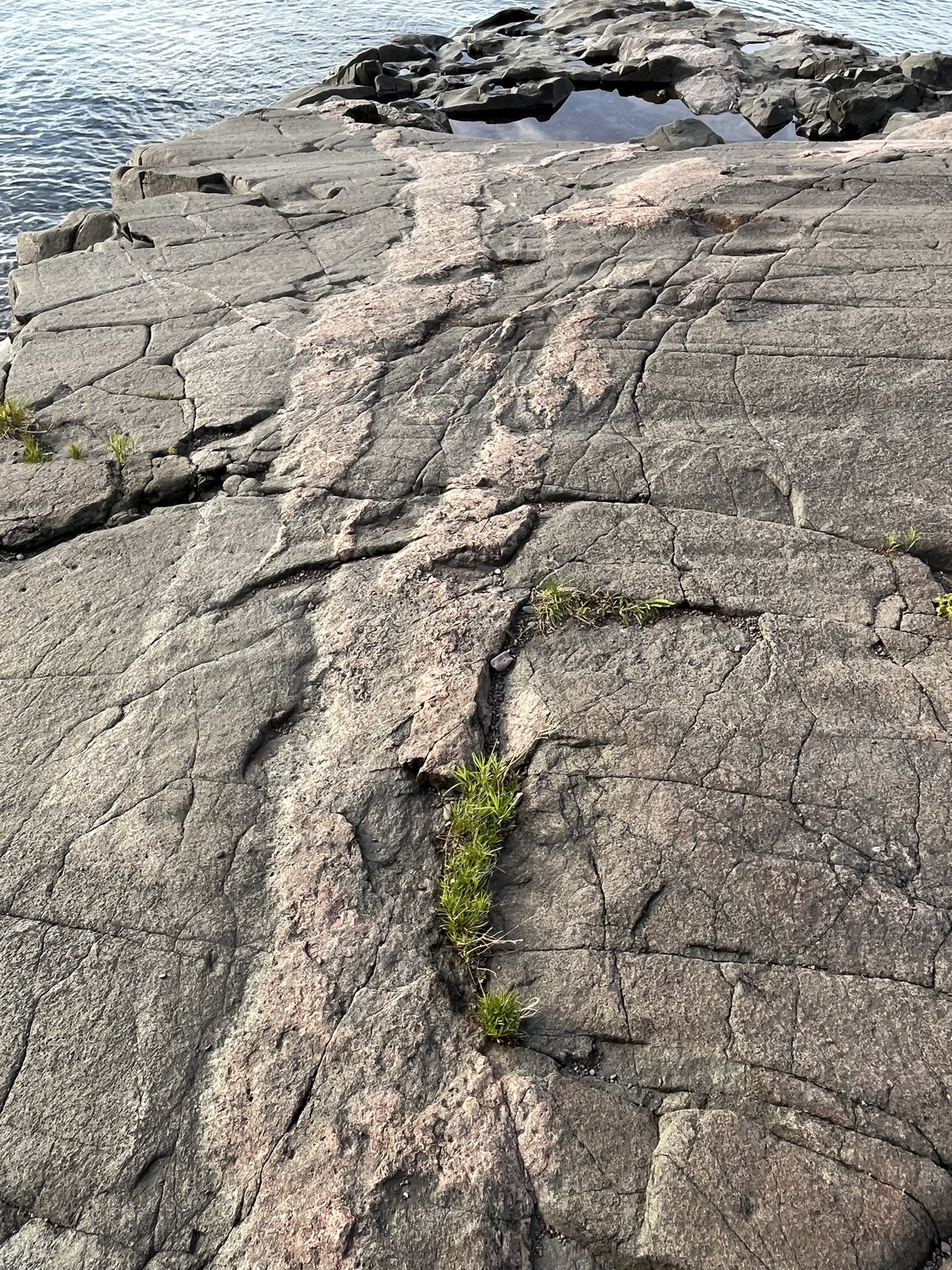
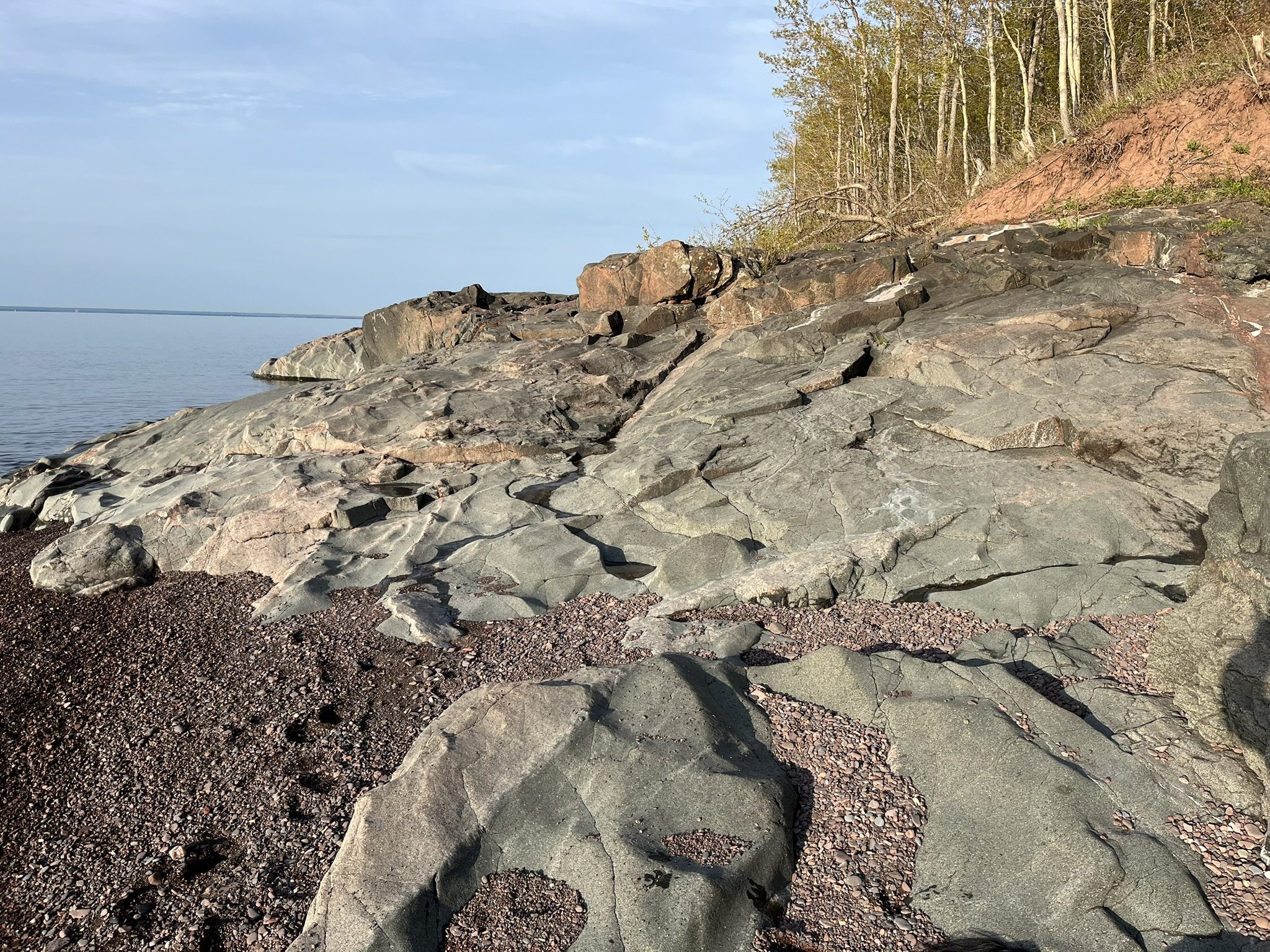
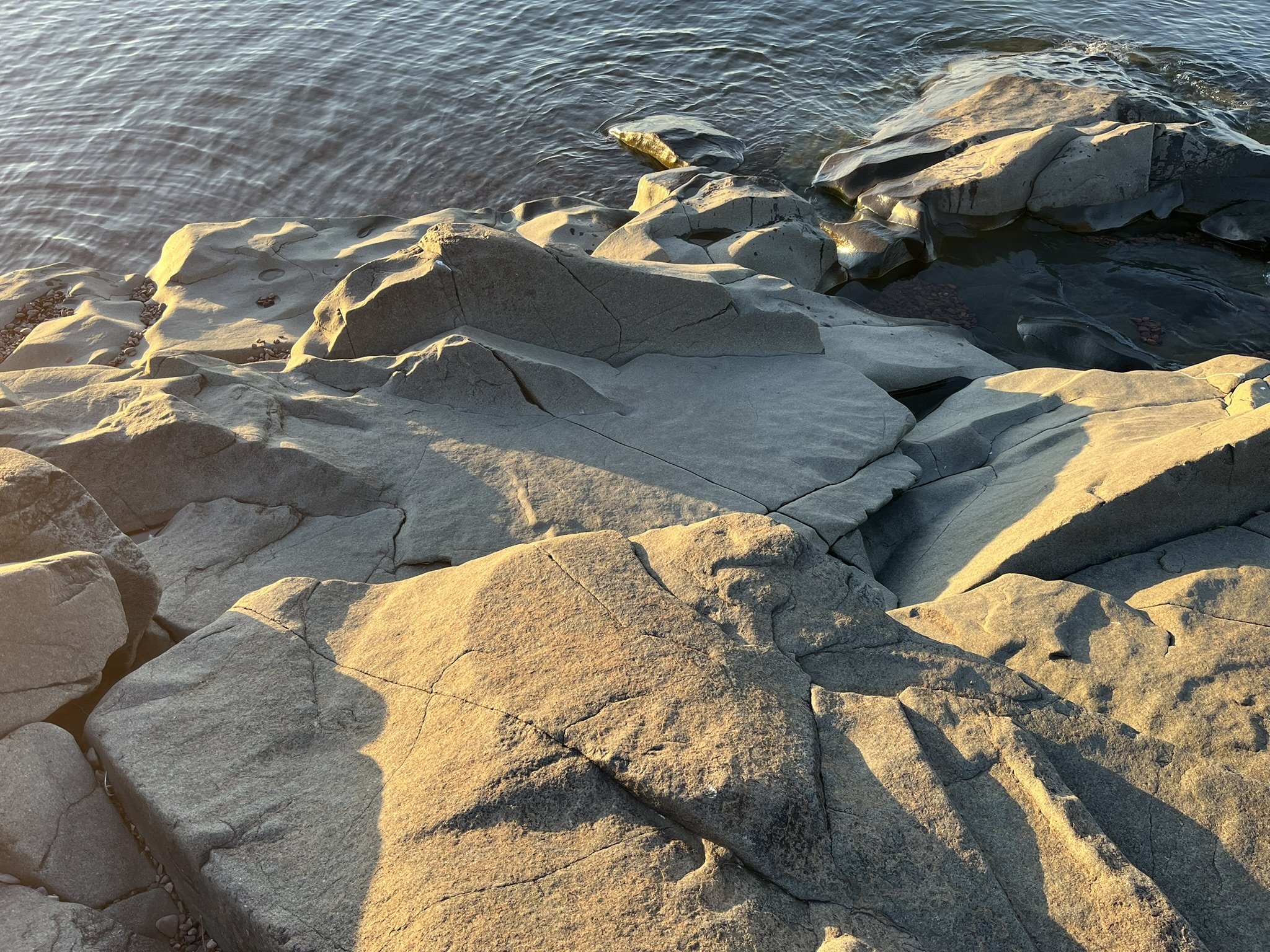
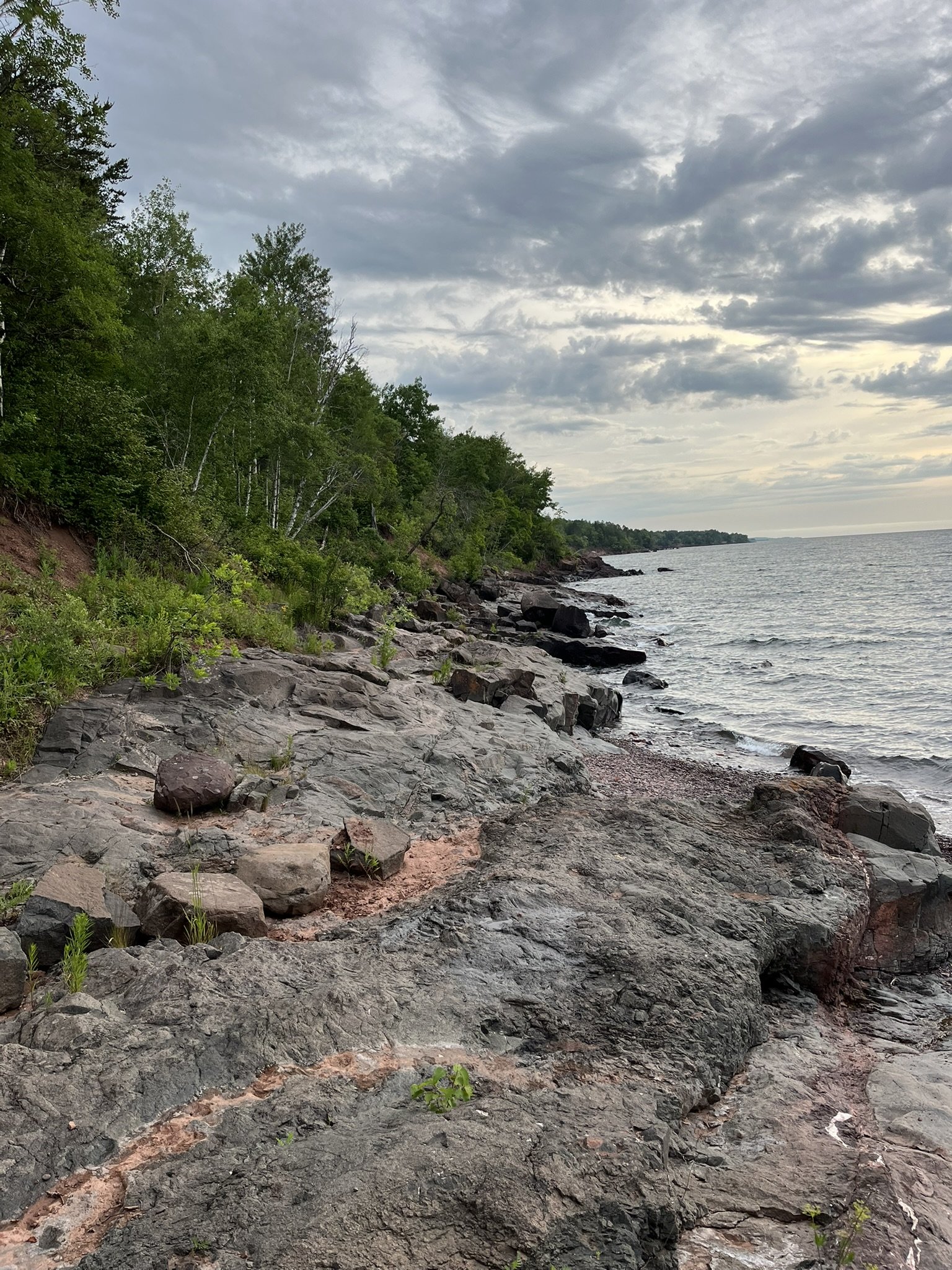
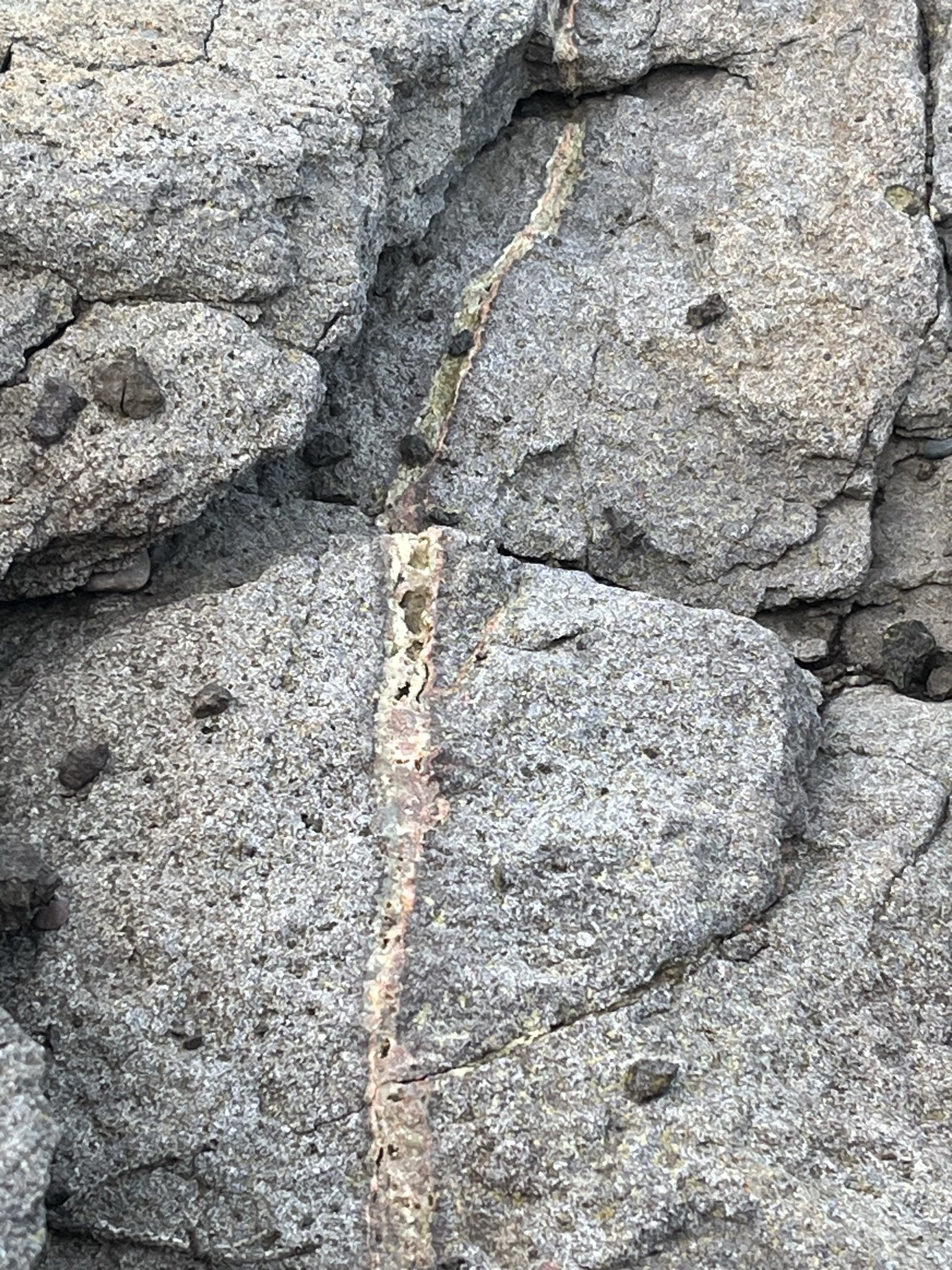
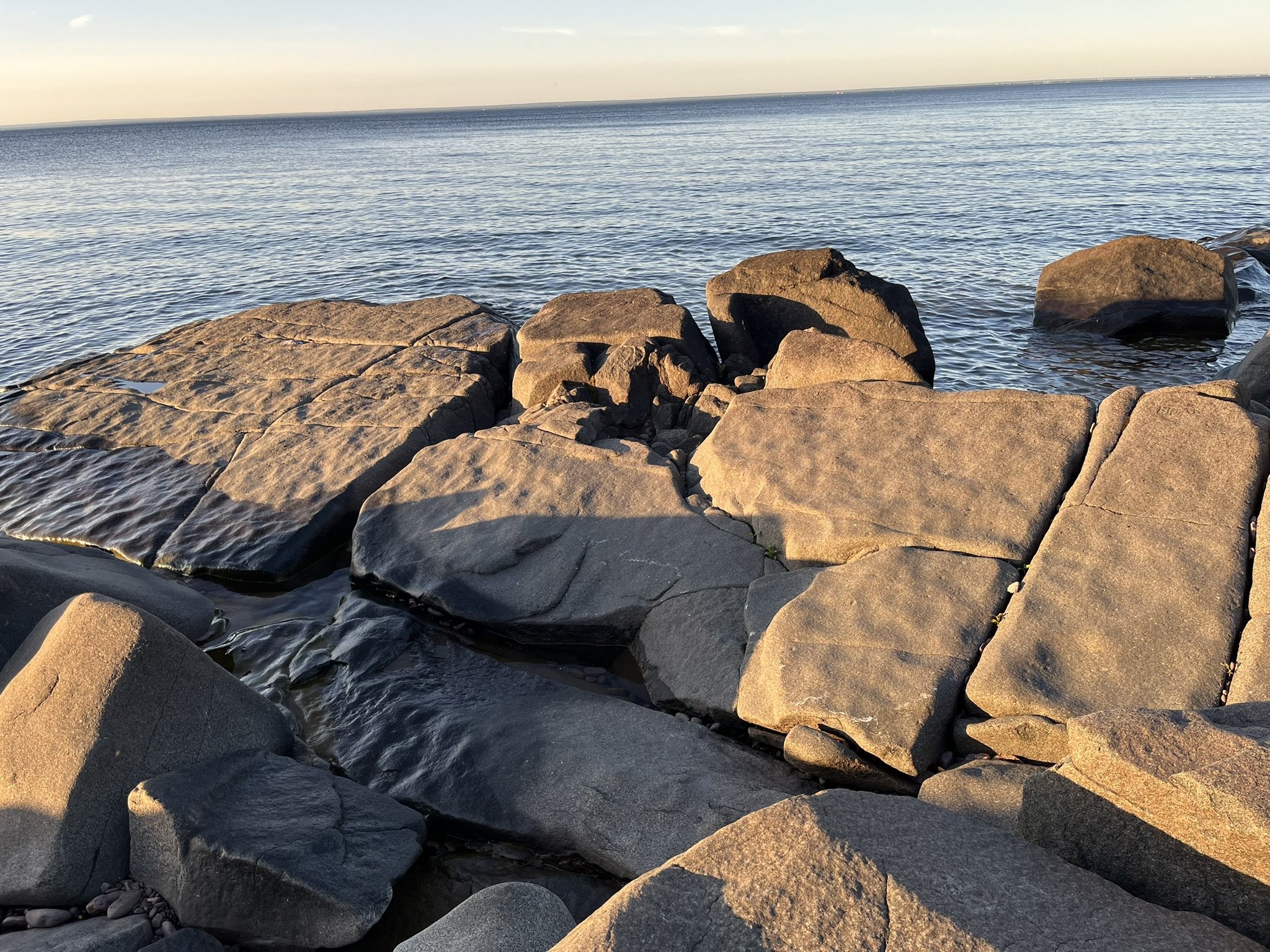
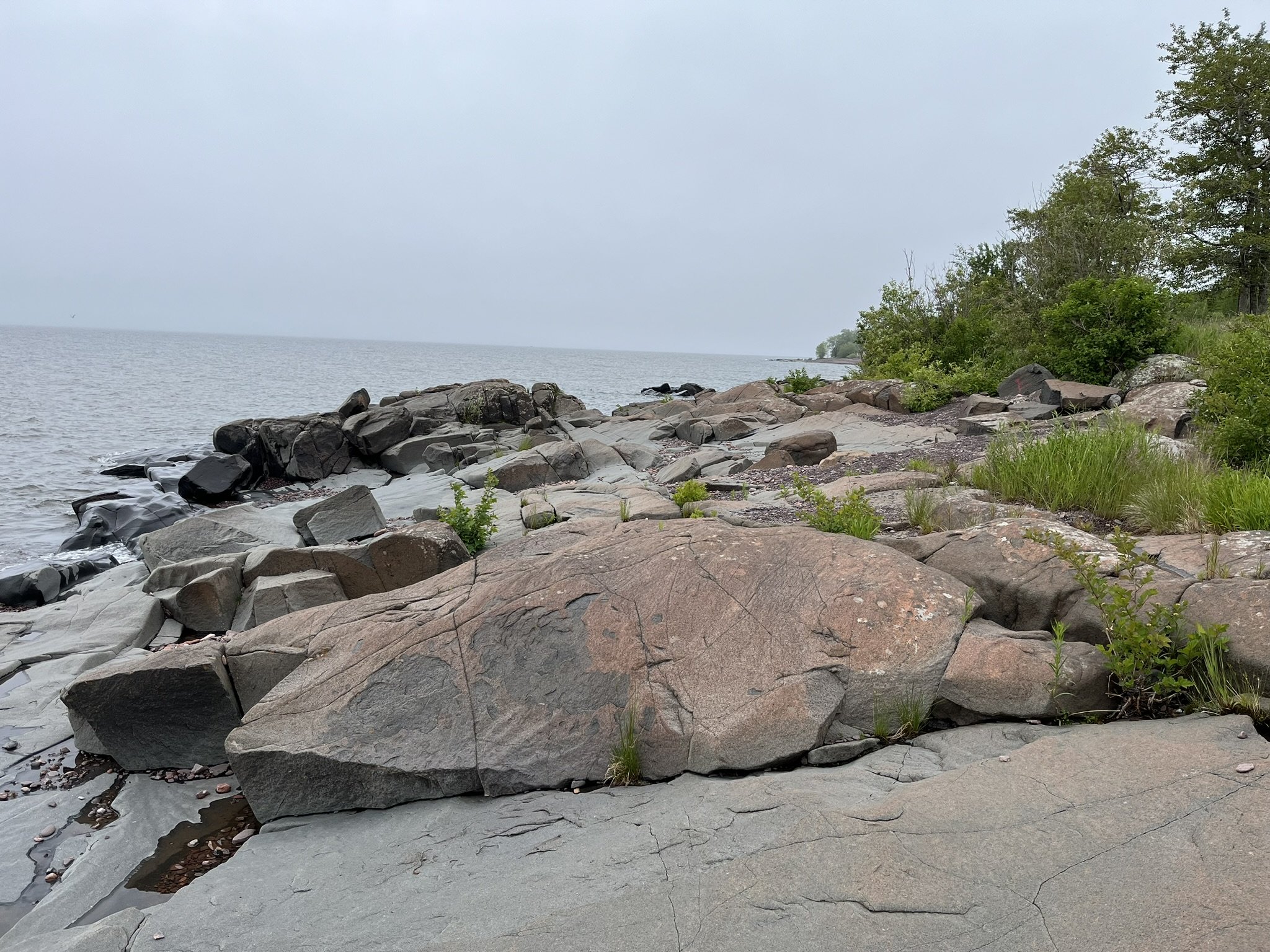
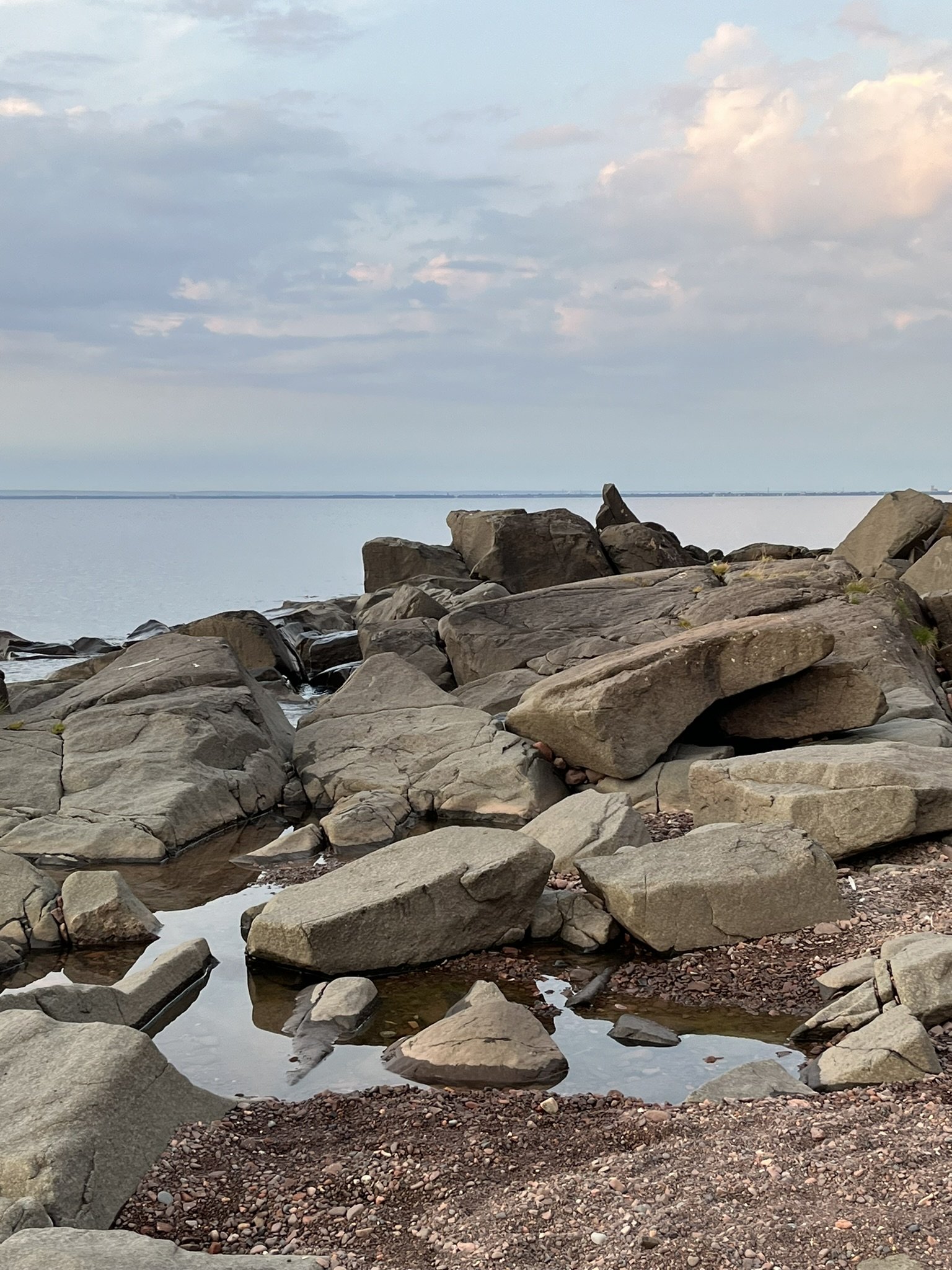
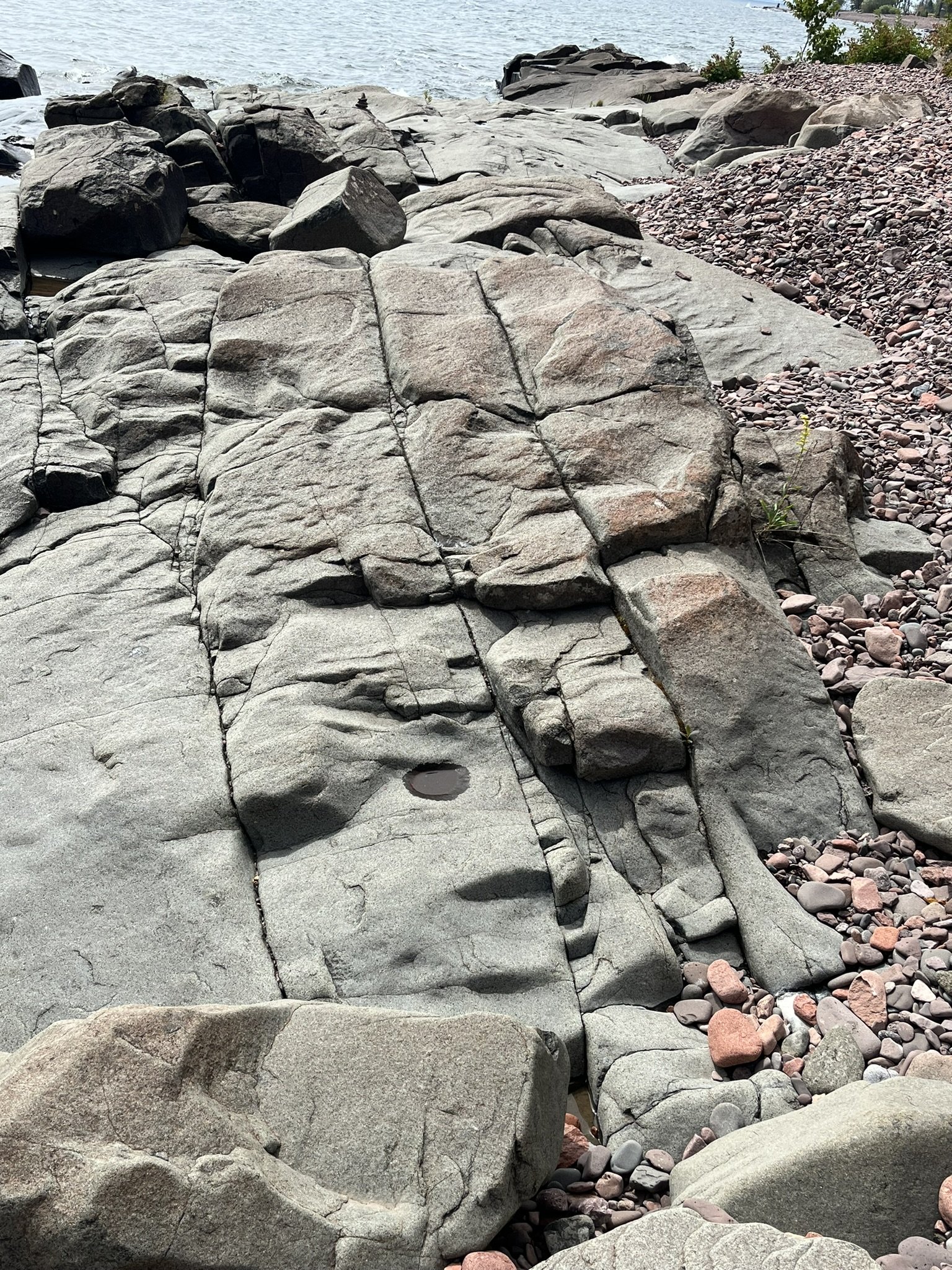
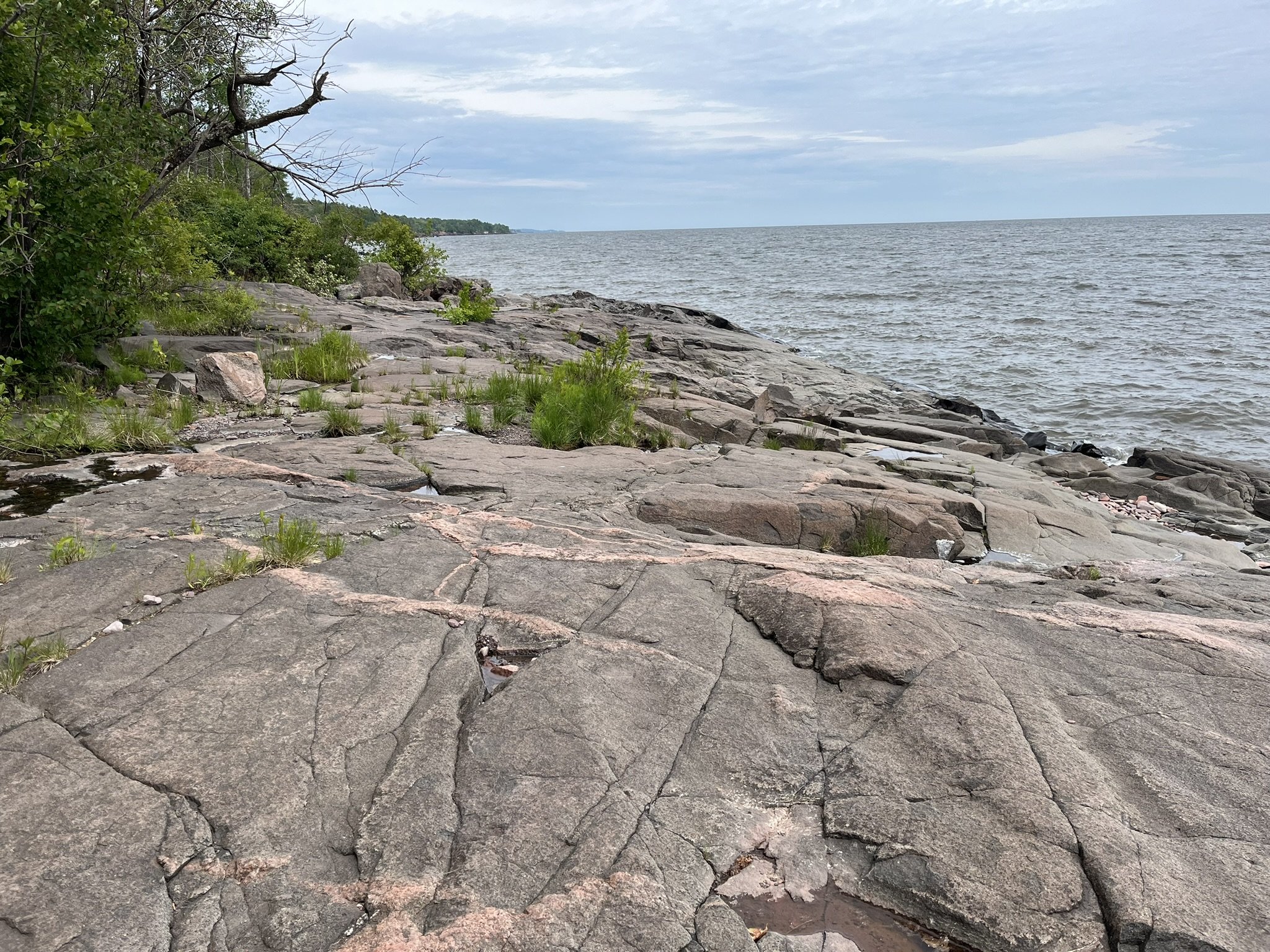
According to the Anishinaabe, the indigenous people of the lands surrounding Lake Superior, the rocks, cliffs, and boulders are imbued with spirit. “Rocks are regarded as grandfathers; living entities with memories and tales to impart to those among us who are fortunate enough to listen to the ancestral voices.”[ii] That spirit, the wisdom of ancestors, is palpable when standing on these ancient rocks who have been witness to so much change on this planet.
“Are stones alive?” was the question raised in a recent conversation with my nephew and other family members. Knowing in my bones the vitality of the rocks and stones I’ve encountered, I unhesitatingly answered “Yes.” The looks of incredulity abounded. On my way home I received a text from my nephew’s wife, who hadn’t been present during the conversation, saying that she heard that I’d tried to explain that stones are alive and they were skeptical. I can well imagine the conversation about crazy Aunt Beth, thinking stones are alive.
I certainly know that we need rocks for life. We so often forget that the minerals we depend on for life – calcium for our bones, iron for our blood, phosphorous for tissue repair, sodium and potassium for the electrical synapses that keep our heart working, and so many others – come from rock. As someone who nearly died of “water poisoning,”[iii] I know in a very real way that we are saltwater creatures, and that water by itself is not enough for life. We also need the rocks. As Anishinaabeikwe Patty Krawec wrote, “whatever I eat has taken up nutrients from the ground, including minerals, and the land becomes a part of me.”[iv] Thus, one could also argue that rocks’ aliveness is made manifest in every plant and animal on the planet that depends on them for life.
But it is more than that. As Anishanaabe author Louise Erdrich wrote, “A stone is, in its own way, a living thing, . . . a living thing to some cultures and a dead thing to others.”[v] I had tried to explain the cultural differences. That Anglo-Euro cultures that predominate in the US today view rocks, as well as minerals, trees, water as inert, as only resources for our use, was met with some defensiveness. That rocks and other beings have energy that we need only to develop our capacity to listen in order to receive was met with even more skepticism.
I know my views are not mainstream. But living here, where the Earth is so vibrantly alive with forests and streams, with the great lake Gichigami and this ancient bedrock, here where indigenous culture is so vital and pervasive, how could I believe in a dead planet? My views have been influenced not only by my experience and the wisdom of indigenous cultures, but also by science, specifically the work of Nikola Tesla, whose work with radio and other forms of wireless transmission has been foundational to the development of the worldwide web. Influenced by Eastern philosophies, especially the concept of qi, the life energy that flows through everything and connects all beings and the cosmos, Tesla regarded everything on Earth and beyond as being infused with energy. We need only to develop our capacity to receive it.[vi]
The context of my conversation with my nephew was his seeking my thoughts on his philosophical pondering, beginning with the assumption of only human beings having the capacity for consciousness, by which he meant self-consciousness – awareness of oneself, and consequently, that humans matter most. If that is the case, he reasoned, then we should be prioritizing the survival of humans above all else and prepare for life beyond Earth, which seems on a path of destruction. I responded that I didn’t believe in the supremacy of any being. Quite frankly, I wouldn’t want to live on a planet without rocks and water and trees and earthworms and fungi and deer and dogs. Nor do I think any of us could survive that.
The words of Carol Christ echoed through my mind, “There are no hierarchies among beings on earth. . . .” RadioLab’s Lulu Miller only recently discovered what Carol Christ wrote decades ago. After much scientific research, she concluded that “there is no ladder.” “Animals can outperform humans on nearly every measure supposedly associated with superiority.”[vii] She pointed out that crows have better memories, ants rescue their wounded, and blood flukes have higher rates of monogamy. Or as Christ put it more poetically, “We are different from the swallows who fly in spring, from the many-faceted stones on the beach, from the redwood tree in the forest. We may have more capacity to shape our lives than other beings, but you and I will never fly with the grace of a swallow, live as long as a redwood tree, nor endure the endless tossing of the sea like a stone. Each being has its own intrinsic beauty and value….”[viii]
Miller went on -- “To get stuck on a single hierarchy is to miss the bigger picture, the messy truth of nature, the ‘whole machinery of life.’ The work of good science is to try to peer beyond the ‘convenient’ lines we draw over nature. To peer beyond intuition, where something wilder lives. To know that in every organism at which you gaze, there is a complexity you will never understand.”[ix] Or as Erdrich said of a stone, that while “not a biological being. . . [it is] one with a history far beyond our capacity to understand or even imagine.”[x]
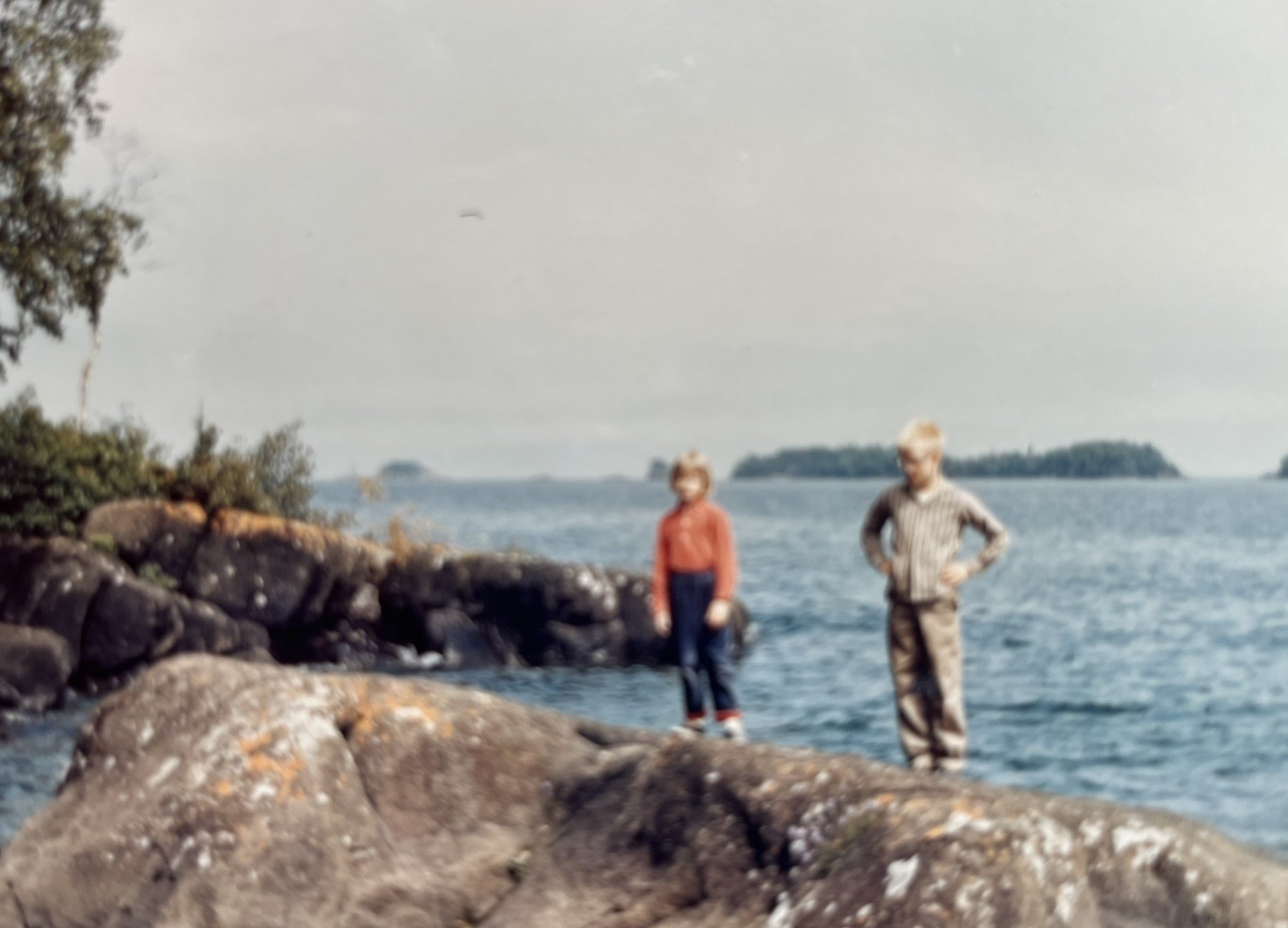
I first fell in love with those rocks when I visited Isle Royale with my family when I was seven. I spent hours leaping from one to the next or just sitting on them, absorbing their strength and wisdom. I felt like I’d come home. Years later I would make my home near these rocks. They are still where I go to listen, to ground, to get in touch with my own aliveness. The basalt is made in part of hematite, known for grounding and protection, anchoring one’s energy to the earth and that is certainly what I feel when standing on these rocks. It is also composed in part of magnetite, and I am drawn to them as iron to a magnet. I’m not alone. Just as seventy years later I continue to clamber from rock to rock, I’ve watched generations of children and adults doing the same, all infused with the aliveness and joy emanating from these rocks.
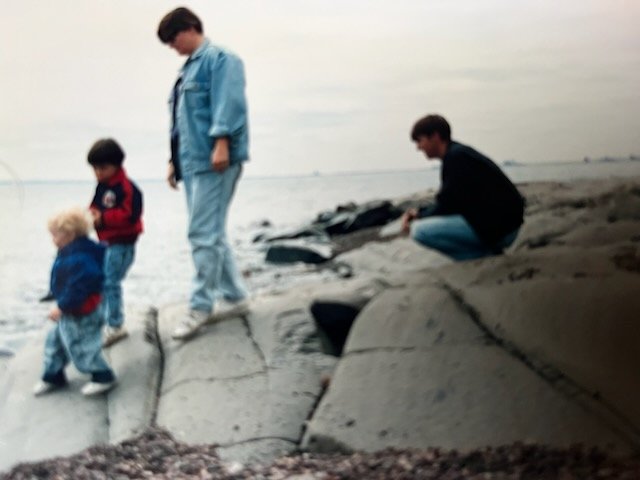
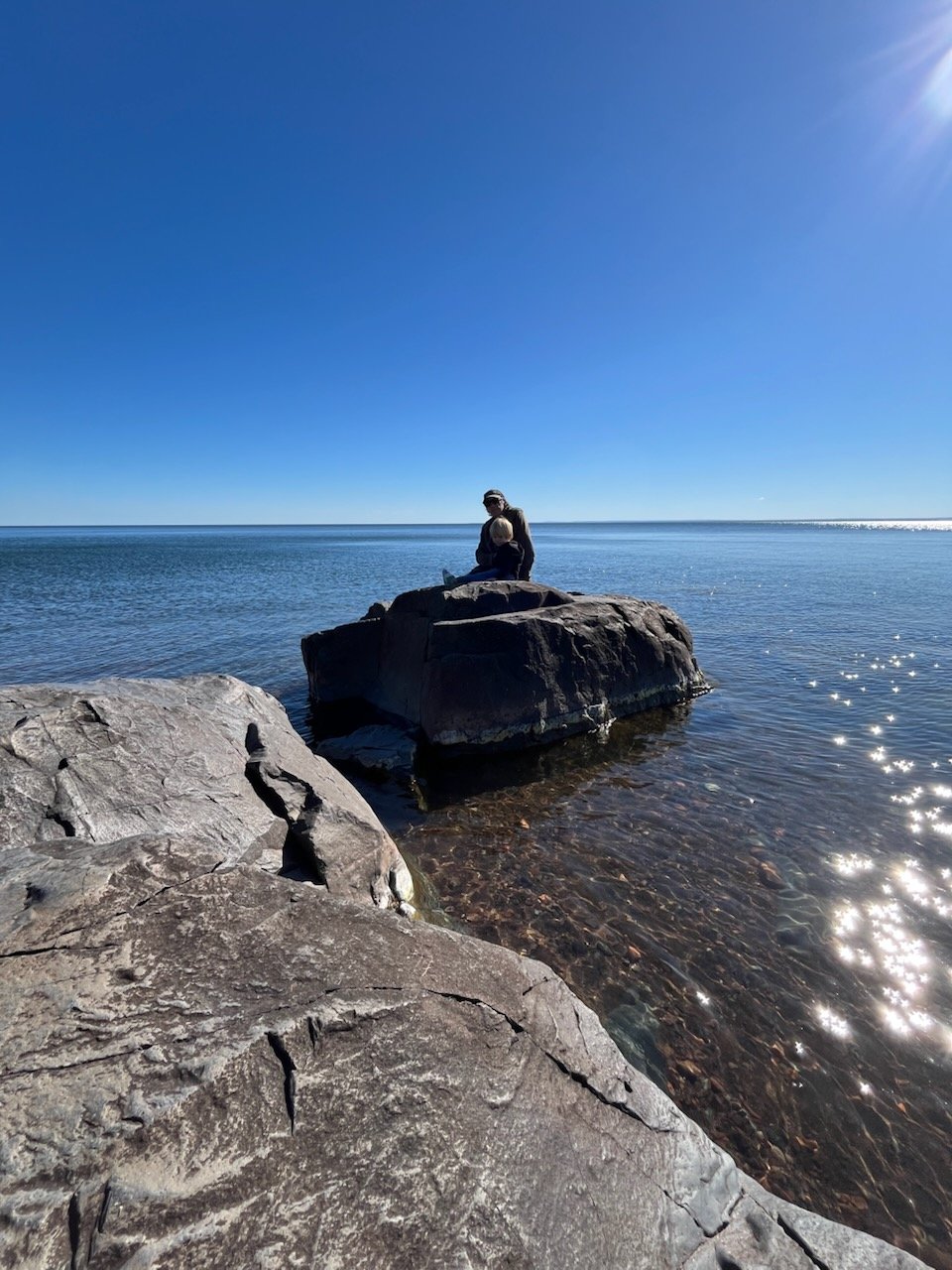
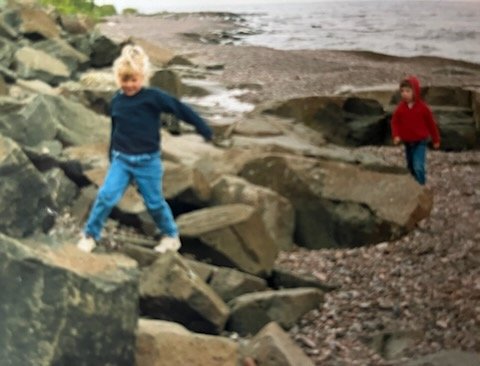
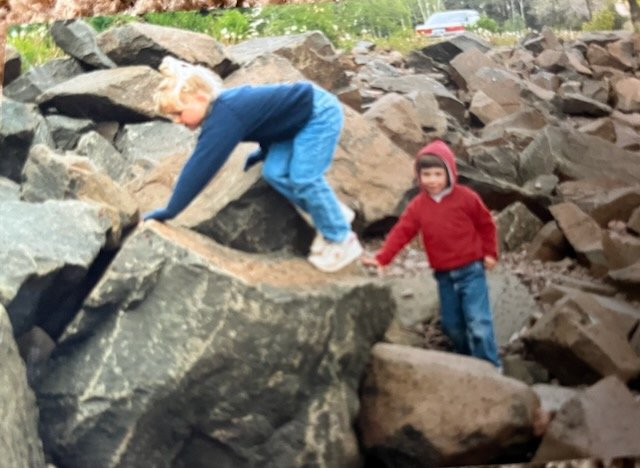
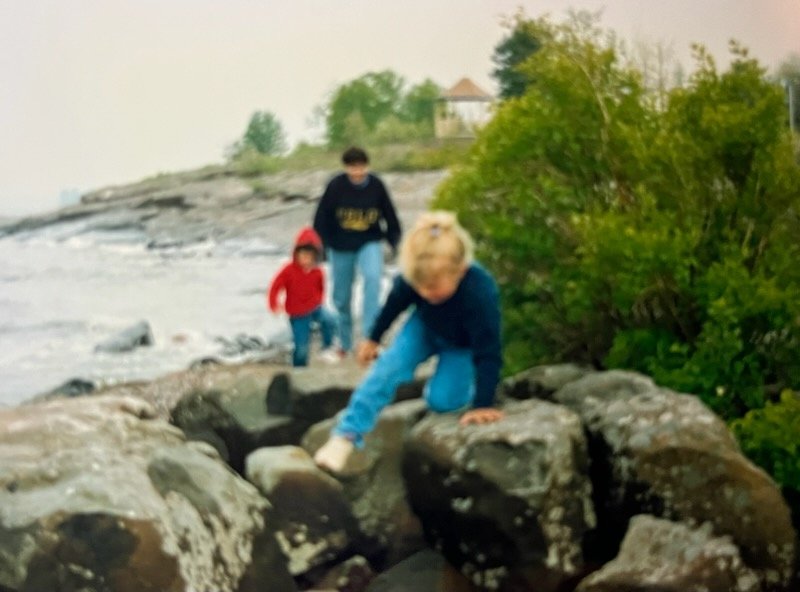
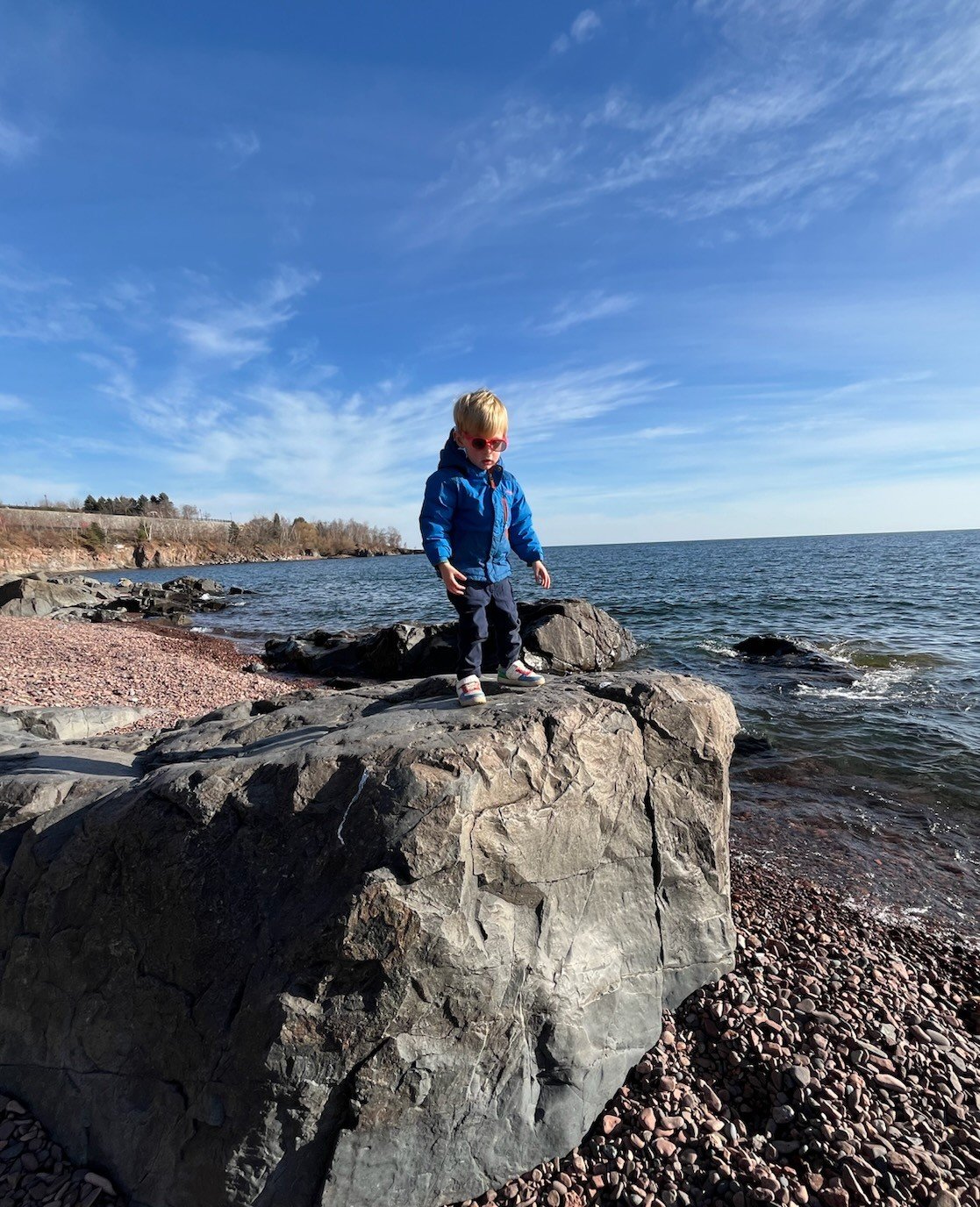
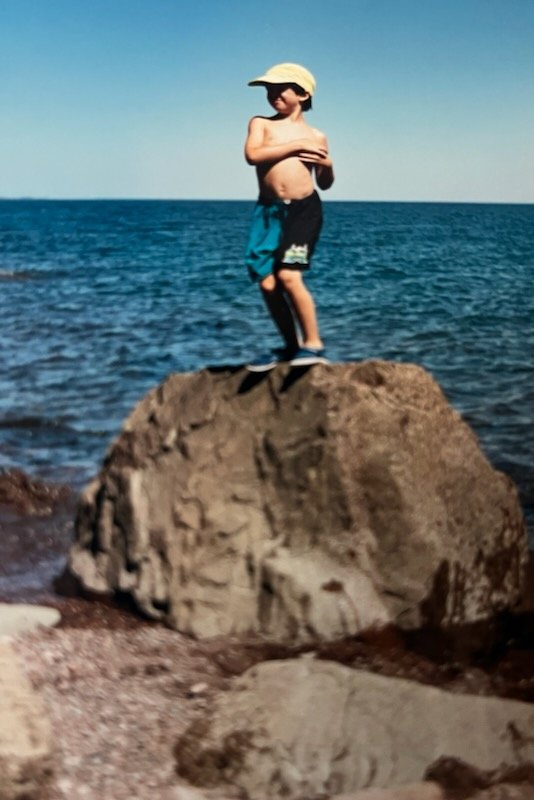
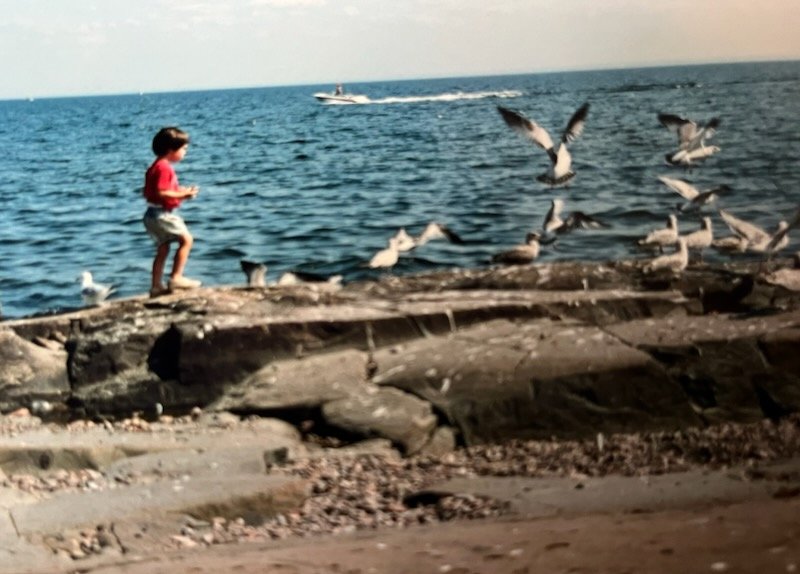
These rocks have endured so much, and give us so much. They deserve our reverence and respect. As Krawec wrote so beautifully, “Stones are ancient, older than water, older than time. Bones of the earth. They’ve been through so many worlds, so many floods, and they hold all the memory and knowledge that comes with it. Eternity sits in my hand, and it ties me to home.”[xi]
Sources
Anderson, Chel & Adelhaid Fischer. North Shore: A Natural History of Minnesota’s Superior Coast. Minneapolis: U. of Minnesota Press, 2015.
Christ, Carol. “Rethinking Theology and Nature.” In Weaving the Visions: New Patterns in Feminist Spirituality. Ed. Judith Plaskow & Carol P. Christ. New York: HarperOne, 1989. 314-325.
Erdrich, Louise, “The Stone,” The New Yorker. September 2, 2019. “The Stone” | The New Yorker
Krawec, Patty. Becoming Kin: An Indigenous Call to Unforgetting the Past and Reimagining Our Future. Minneapolis: Broadleaf Books, 2022.
Miller, Lulu. Why Fish Don’t Exist: A Story of Loss, Love, and the Hidden Order of Life. New York: Simon & Schuster, 2020.
Nikola Tesla: Energy as a universal force and the vision of a harmonious future
Stories and Teachings from the Earth, part 1: The Rocks That Sing
[i] Anderson & Fischer, 4
[ii] Stories and Teachings from the Earth, part 1: The Rocks That Sing
[iii] Water poisoning, also known as “water intoxication,” occurs when overconsumption of water, or in my case of intravenous fluids without sodium, disturbs the electrolyte balance in the body, resulting in injury to the brain.
[iv] Krawec, 137.
[v] Erdrich.
[vi] Tesla was an early advocate of renewable energy and warned against the exploitation of the Earth.
[vii] Miller, 146.
[viii] Christ, 323.
[ix] Ibid., 162.
[x] Erdrich.
[xi] Krawec, 129.