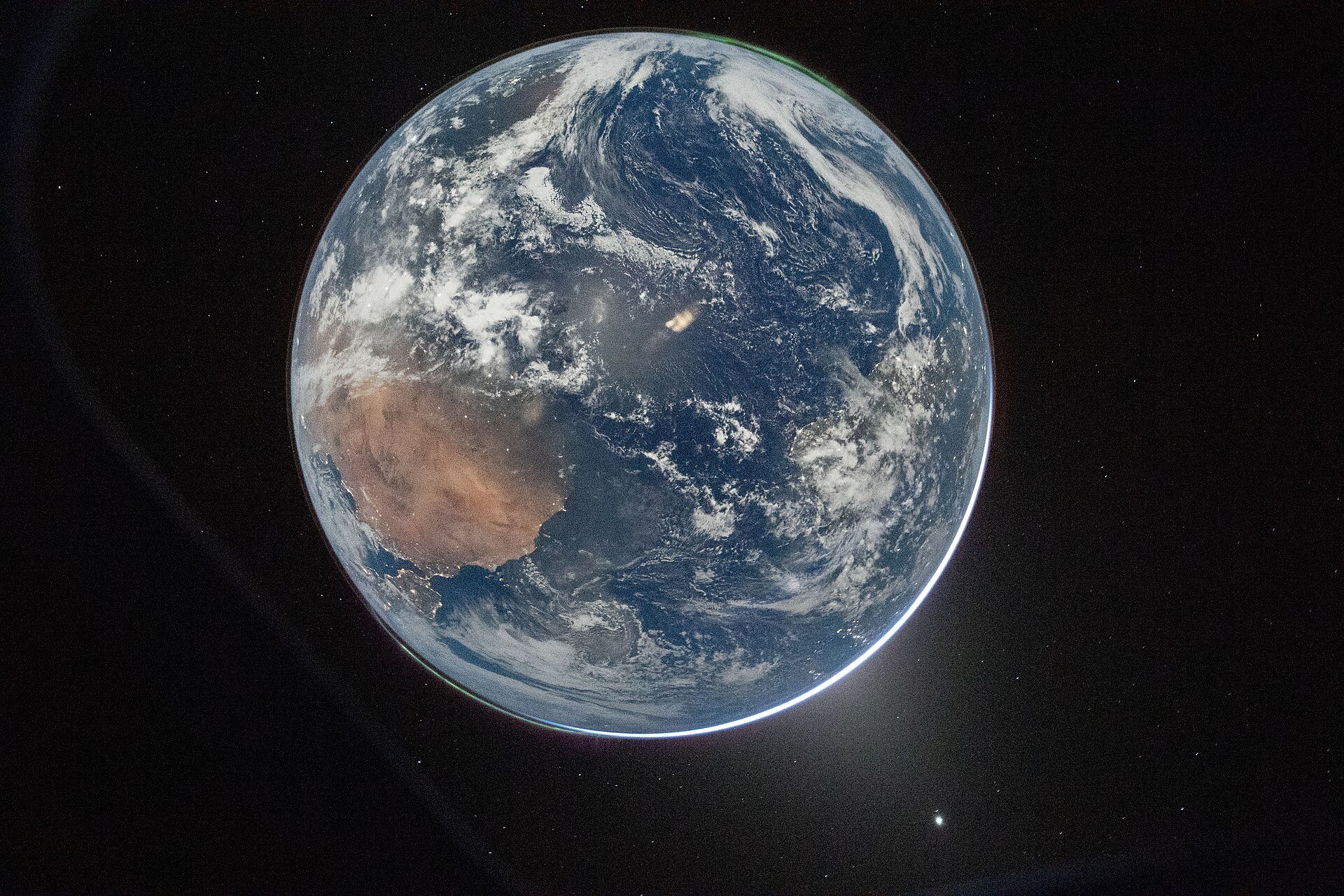
This pretty planet
Spinning through space
You're a garden, you're a harbor
You're a holy place
- Tom Chapin
As I’ve been reflecting on planet Earth these past few weeks, with the Artemis II flight crew sending exquisite photos of the earth rising and setting from behind the moon, and with the anniversary of the first Earth Day approaching, these lines from Tom Chapin’s song, “This Pretty Planet,” have been echoing in my mind. We are all together spinning through space on this orb of rock and fire in which all the elements combined under just the right conditions to create this one precious living green and watery blue planet. And yet, we are also poised on a precipice where it seems humans, through our arrogance and ignorance, are hellbent on destroying it all.
In her masterpiece, A Chorus of Stones, ecofeminist Susan Griffin warned of the ways in which our dreams to reach the moon and stars might lead to a callous disregard of the earth. Indeed, the ultimate mission of the Artemis space program is to establish a colony on the moon, and certainly, talk has swirled about in the popular culture of the need to establish colonies on Mars should Earth become uninhabitable due to climate change and other environmental disasters. Griffin’s investigation into the origins of the civilian bombardment led her to explore the history of flight -- from the Wright brothers’ first flight at Kitty Hawk to Blériot’s crossing of the English Channel to the development of the V-1 rocket to the increasing development of guided missile systems to rockets to the moon. In the poetry and scientific writings of those early days of flight she found a desire to escape the limitations of the earth and feared our ever-increasing exploration of space beyond the Earth would lead to its abandonment altogether.

Earth Rise
However, when a few weeks ago, four astronauts traveled farther from the earth than humans have ever gone before, the perspective they shared from that great distance from Earth is not what Griffin had suspected -- an abandonment of Earth – but rather its embrace. The perspective from that distance provided them with an even greater recognition and appreciation of Earth’s preciousness. As one of the astronaut’s, Christina Koch, said upon her return to Earth, “The moon really is its own unique body in the universe. When we have that perspective and we compare it to our home of the Earth, it just reminds us how much we have in common. Everything we need, the Earth provides, and that, in and of itself, is somewhat of a miracle.”[i] Her words reminded me of the lines from the Haudenosaunee Thanksgiving Address, “The Words That Come Before All Else” -- “We are thankful to our Mother the Earth, for she gives us everything that we need for life.”[ii] Artemis II – named for the goddess of the moon, yes, but Artemis is also the goddess of the wilderness, the protector of wildlife, forests, and mountains, of women and children. It seems that the perspective of those who would journey with Artemis to the moon is of the importance of protecting this wild and precious Earth. As Koch’s fellow astronaut, Jeremy Hansen, reflected, this voyage to the moon and beyond only confirmed his perspective “that we live on a fragile planet in the vacuum, in the void of space. We know this from science. We’re very fortunate to live on planet Earth.”[iii]
And yet, we continue our plunder. After her recent death, I began reading the late Tatiana Schlossberg’s book Inconspicuous Consumption. I thought I was good on this issue. Decades ago I’d put all the phantom-power sucking appliances in my home on power strips to shut off when not in use. I eat an organic and vegan diet. I stopped flying. I use a 5-minute timer in the shower, well, at least most of the time. I dry clothes outside on the line as soon as the weather turns warm enough. I buy most of the clothes for my grandchildren from a children’s thrift store. We installed a heat pump a few years ago and added several inches of insulation to our house, though our house was too wooded for solar to be effective and I envy every house I pass with a beautiful solar array. And yet, here I was, inconspicuously consuming away, adding to the destruction of the Earth one little bit at a time – any time I watched Netflix, put more photos and e-books in the “cloud,” added to the glut of cardboard by ordering pet food from Chewy, burned wood in our fireplace, or bought a new pair of jeans – especially the kind I like, stonewashed with a little stretch. With every environmental problem Schlossberg raised, the solutions she’d found seemed to cause more complications. It seemed we are all hopelessly on a path of self-destruction with no way out.
At about the same time, I picked up Rebecca Solnit’s new book, The Beginning Comes After the End, and for the first time in a while, I went to sleep with a bit of joy and hope in my heart, for she also offers a shift in perspective -- the long view of time. She writes, “If knowledge is power, memory and perspective are among its most important aspects. Only in the long view can you see the patterns emerging, the way the present builds on the past . . . If you don’t see time on the scale of change, you don’t see change; if you don’t remember how things used to be, you don’t know they’re different than they were and how that unfolded.”[iv] While in one sense that long view shows us how things on Earth have gotten so much worse – so many fewer birds at my feeder this winter, so much less green space, so many record warm years and extreme weather events just in the past ten years – in another sense the long view shows us how much better things are. Before that first Earth Day inspired the passage of the Clean Air and Water Acts, the Cuyahoga River was so polluted that it caught on fire, several times; Lake Erie was unswimmable; bald eagles were nearly extinct; the pollution around coal-burning factories and power plants made the air hazardous to breathe; smog in LA from car exhaust was so thick and noxious that people wore the gas masks they had leftover in case of attacks during WWII and plants withered and died.
Just looking back a few decades, Solnit chronicles how normal and seemingly appropriate were the discriminatory treatment of African American living under Jim Crow laws; the absence of women from Ivy League schools, boardrooms, and juries; sexual harassment in schools, factories, and offices and intimate partner violence in the home; corporal punishment in schools; LGBTQ folk being closeted; and, I would add, the removal of Native children to be sent to boarding schools and suppression of indigenous religious expression. And then, things began to change — one liberation movement inspired another and another and another, all with desires for “radical equality, radical inclusion, radical respect.”[v] Segregation by race and sex now are violations of the Civil Right Act, children are no longer routinely beaten in schools, sexual harassment is recognized as discrimination and a violation of Title VII of the Civil Rights Act, services for survivors of sexual assault and domestic violence are widely available, LGBTQ folk are free to marry, and Indigenous peoples freely practice their religions. It’s all of a piece, for these movements have also included the liberation of the Earth — the air and waters are cleaner, salmon are returning to rivers as dams are removed and waters once again move freely, bald eagles and peregrine falcons have come back from the edge of extinction, and renewable energy has become the most cost-efficient mainstream source of power in the world. The perspective Solnit provides is reassuring, realistically I believe, that though in increments so small as to be almost invisible, hundreds and thousands of efforts are being made daily to set the world aright, moving us in the direction of a kinder and more just world and a more habitable Earth. Despite what one can only hope are the temporary setbacks from yet another Trump presidency, in so many respects, given the perspective of the long view, and not even that long, life in so many respects is getting better.
Many years ago, feminist historian Gerda Lerner came to speak at our university. She met with some of our students after her talk, and when several expressed their frustration at the continuing inequalities and discrimination they experienced as women, she responded with the perspective of the long view, suggesting that compared with the lives of women three thousand years ago, the conditions for women in the US today were so much better. She told them that change sometimes takes a long time, and undoubtedly it feels too slow, but it is happening.
Of course, given climate change, and what lately feels like living on the edge of nuclear annihilation, one must wonder, do we have the luxury of time?
As Griffin showed, the threat posed by nuclear missiles in the hands of unstable individuals and governments was not inevitable, but rather the result of a series of choices of individual people, each small decision leading us one step closer to that possibility. The history of flight and of aerial bombardment are intimately interwoven, for as the invention of flying machines seemed more imminent, at the First International Peace Conference at The Hague in 1899, the attendees adopted rules of engagement that prohibited the dropping of projectiles and explosives from flying machines. Just eight years later, after the Wright Brothers’ first flight at Kitty Hawk in 1903, at the Second International Peace Conference, this prohibition was overturned. By the time of the first World War, dropping bombs from airplanes had become a normal part of war.
……
“Denormalizing is important work,” Rebecca Solnit would write.[vi] It may be the most important work we can do.
……
Werner von Braun only wanted to send a rocket to the moon. Instead, his invention of the V-1 and then the V-2 rockets was funded and facilitated to enhance the capacity for aerial bombardment without manned flight during WWII. The increasing enhancement of guided missile systems have almost entirely been in the name of expanding our capacity to kill. And to kill not only our fellow human beings but also every living thing on Earth, for Griffin might just as easily and correctly written of the intimate entwinement of militarism, war, and the degradation of the environment.[vii] Everything is connected.
As the Artemis II astronauts ventured into space, launched into orbit by a rocket based on those bellicose beginnings, on Earth war was raging. With glory-seeking glee Trump ordered bombs to be dropped on civilians and oil and gas refineries with wanton destruction of the surrounding soil, air, and waters, and then threatened to wipe out an entire civilization. The astronauts on the other hand, with their perspective of a greater distance saw only one Earth free of all artificial and arbitrary boundaries and decried the wars and divisions on earth. As Astronaut Hansen said, his time in space only strengthened his perspective that “our purpose on the planet as humans is to find joy and (lift) each other up by creating solutions together, instead of destroying. And when you see it from out here, it doesn’t change it. It just absolutely reaffirms that. It’s almost like seeing living proof of it.”
Whether one’s perspective is enhanced by seeing the Earth as whole, or by the long view of time,[viii] or by an everyday appreciation of the miracles occurring around us as the sap begins to flow, the once bare branches begin to sprout leaves, and the long dormant crocus emerges from its winter home, Earth Day comes as a reminder to use such perspective to inform our lives and our actions to recognize and act upon the awareness that perspective provides of the preciousness of “this pretty planet, spinning through space . . . a garden . . . a harbor . . . . a holy place.”*
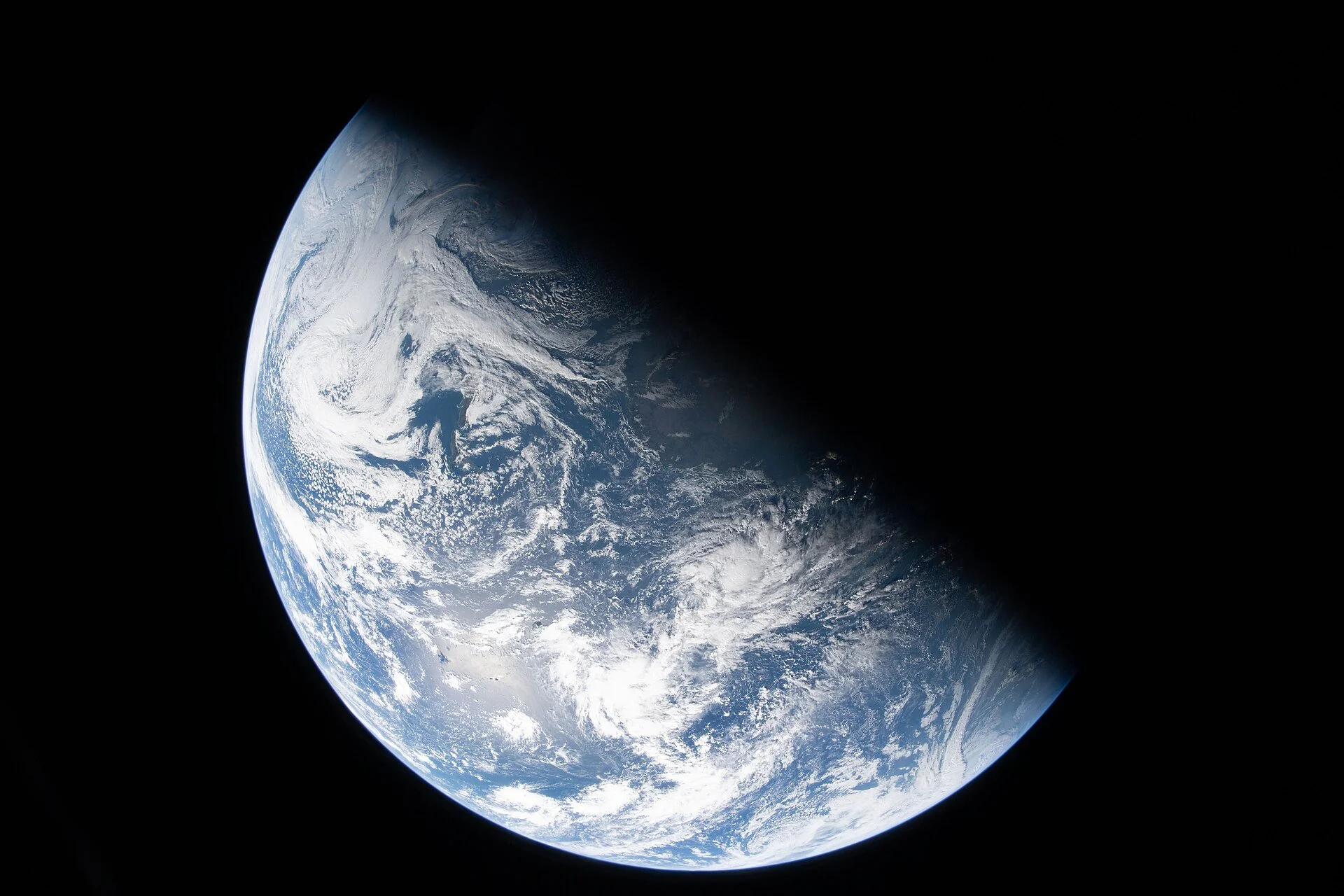
* To listen to Tom Chapin’s song, press the “Learn More” button below. I suggest listening to it while reading this post and viewing the photos taken from Artemis II.
Sources
“Astronauts back on Earth after Splashdown to end moon mission.” Duluth News Tribune, 4/11/26, D8.
Forster, John and Tom Chapin. “This Pretty Planet.” Limousine Music Co. & The Last Music Co., 1988.
Griffin, Susan. A Chorus of Stones: The Private Life of War. New York: Anchor Books, 1992.
Kimmerer, Robin Wall. Braiding Sweetgrass: Indigenous Wisdom, Scientific Knowledge, and the Teachings of Plants. Minneapolis: Milkweed Press, 2013.
Schlossberg, Tatiana. Inconspicuous Consumption: The Environmental Impact You Don’t Know You Have. New York: Grand Central Pub., 2019.
Solnit, Rebecca. The Beginning Comes After the End: Notes on a World of Change. Chicago: Haymarket Books, 2026.
Photo Credits: All photos were taken by the crew of Artemis II. Public Domain.
[i] ‘Just the beginning’: Artemis II crew splashes down after record-breaking moon flyby | Artemis II | The Guardian
[ii] Kimmerer, 108.
[iii] “Astronauts back on Earth after Splashdown to end moon mission.” Duluth News Tribune, 4/11/26, D8.
[iv] Solnit, 25.
[v] Ibid., 60.
[vi] Ibid., 44.
[vii] For more information on this see this interview with Doug Weir on the environmental toll of the Iran War as well as previous wars --Bing Videos; and the recent documentary, “Earth’s Greatest Enemy” on the US military as the world’s largest institutional polluter, Earth's Greatest Enemy.
[viii] For an especially stunning long view of time that has probably had the greatest impact on my own understanding of the unique preciousness of the Earth as we know it today, see the PBS series, Ancient Earth. Ancient Earth | NOVA | PBS.