

Hale Bopp
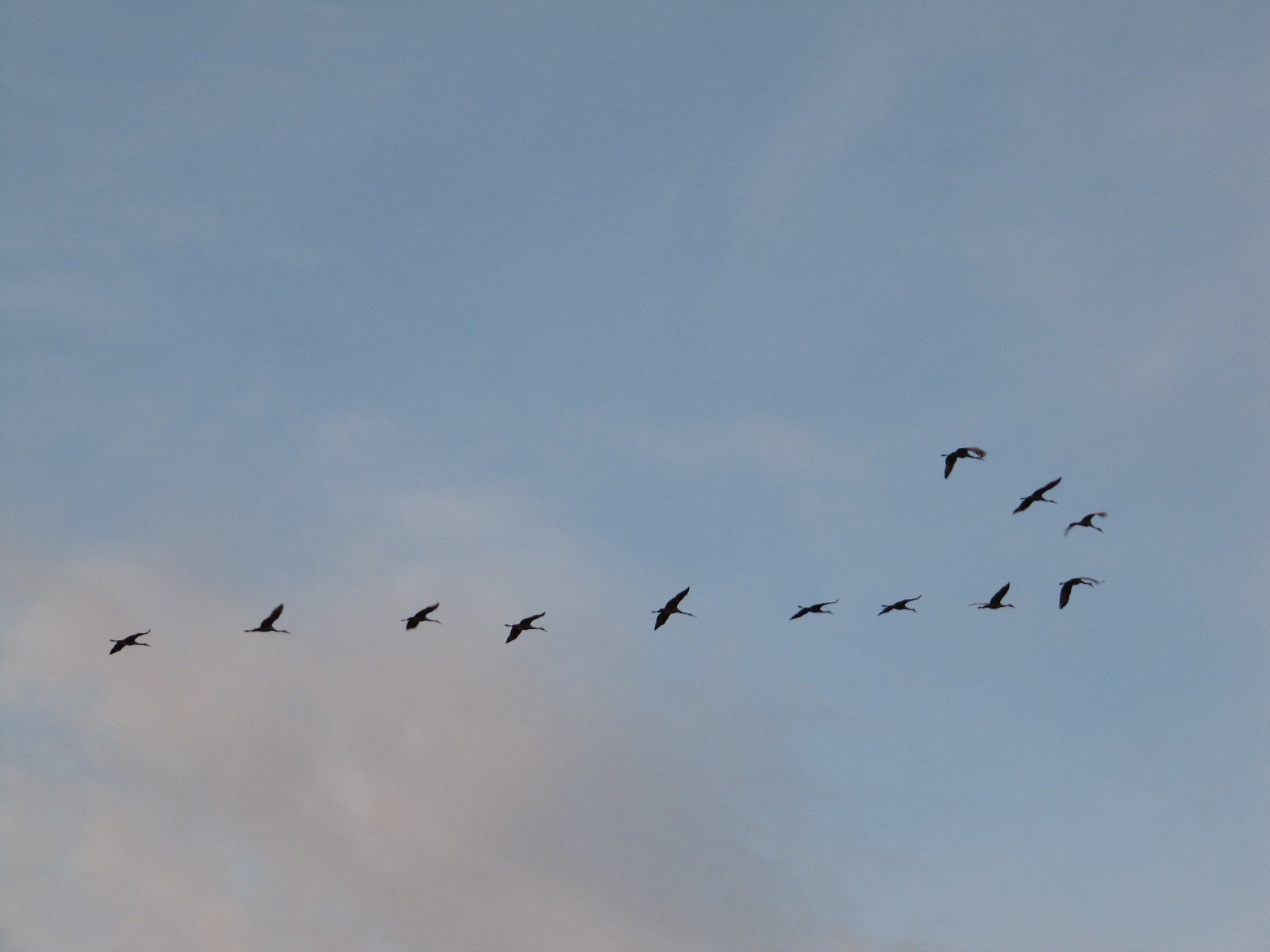
When I moved to Minnesota from Ohio, everyone back home voiced concern about how cold the winters would be. Nobody warned me about how dark they would be, nor how long the dark would last. For years, I complained, but gradually I have come to embrace the dark. The dark invites us to slow down, to rest, to sleep, to dream. It is a time to open to our depths, and to others. There is a kind of magic in the dark. Without the harsh light of judgment, in the dark we are more likely to share our secrets and stories, our wounds and our wonderings, our hearts and hopes with each other. As the deciduous trees lose their leaves, the sky opens as well, giving birth to the night sky. As Sara Thomsen sings in her, “Darkness Cover Me”: “Holy Maker of Moonlight, singing through starlight. . . . womb of the night.” The dark gives us the gift of stars. In the brief nights of summer, I rarely see the stars, but in winter they blanket the sky, giving me a sense of my place in the universe. They arrive like old friends -- the Seven Sisters of the Pleiades appearing in the evening, and Orion greeting me out my window every morning. When Hale-Bopp was visible from earth, I would look for her on my late-night drives home from teaching night class, and there she would be, my constant companion on those cold winter nights. The stars remind us that we are not alone, that we are all related, for we are all made of the stuff of stars.
Lately I’ve been longing for darkness. When I first moved to my home in the woods, the night was dark. As the city has grown, and more houses have been built, and streetlights added, the dark is eclipsed by a never-ending twilight. In my neighborhood, more and more people keep “security” lights on all night long, leaving me feeling invaded by the perpetual light. In our human efforts to resist the dark, we have forgotten the earthly command to rest, and we are all suffering the consequences. Light pollution affects our health, throwing off our circadian rhythms, diminishing the release of melatonin – paving the way for loss of sleep, increased anxiety, and a host of other ailments. Other animals’ health is affected as well, as is the migration of sea turtles and birds who navigate by the stars and by moonlight. We light up the night in order not to get lost in the dark, but perhaps we all have lost our way by being too much in the light. We were born out of darkness, and like the spring bulb that needs cold and dark in order to bloom, so do we need the nourishment of the deep dark to restore our creativity and power.

In our longing for darkness, it is not just the physical dark that we crave, but the metaphysical, the spiritual, the deep well of the ancient dark divine, the original matrix. As China Galland mused, “The longing for darkness [is] also a longing for the womb of god” (54). In her Longing for Darkness, Galland reminds us of the persistence of this longing, and her emergence as Ishtar, Isis, Astarte, Asherah, Tara, Kali, Parvati, Durga, as well as Mary and the Christian mystics writing of the motherhood of the divine. Her iconographic representations abound throughout the world, from the temples to Tara throughout Asia to the many shrines to the Black Madonna throughout Europe. It’s no wonder that it is within this time of deep darkness that Mary is celebrated within Christianity – Mary not as passive, but as the strong, courageous, fiercely protective, earthy maternal divine.
Lucia Birnbaum reminds us that the first African mother is everyone’s genetic inheritance, honored for millennia as Erishkegal, Isis, Lilith, Kali, Oshun, Hagar. It was only with the rise of patriarchy that the dark feminine divine was demoted, displaced, erased, and forced underground. Yet she continues to rise in our psyches and our deepest longings. Each year, thousands walk hundreds of miles in pilgrimage to visit these shrines, all seeking connection with dark, divine, pre-patriarchal female energies of which we are all sorely in need.
Galland writes, “To say that one is ‘longing for darkness’ is to say that one longs for transformation, for a darkness that brings balance, wholeness, integration, wisdom, insight” (152). Certainly, if there was ever a time when we have needed to restore balance, and to gain insight and wisdom, it is now. We are a world profoundly out of balance. It is theorized that dark matter is what holds the stars and galaxies together -- “matter,” from the same root word as “mother” – mater. Banishing the dark mater has thrown us off balance. I image our world thrown off its axis, wobbling through the universe. The energies and acts of hate, violence, oppression, domination, and patriarchy that have been surging throughout the world have thrown us off kilter. We need the qualities of the dark feminine divine -- compassion, justice, equality to restore our balance, and to transform the violent, hierarchical, patriarchy which governs too much of our lives into a peaceful, radically egalitarian democracy (Birnbaum, 147). We have been there before; we can return.
To do so requires our vision and energies. bell hooks wrote of how as a child she would make the treacherous walk through a white section of town, where she could feel the hate pouring down on her, to the safety and homecoming of her grandparents’ home. It was in the homes of Black women that she found her spirit nurtured. Black women resisted white oppression by creating places to heal and be affirmed, and have one’s dignity restored – places where possibility could rise again. The matrix of the dark feminine divine is such a homeplace, fostering both our resistance and the creation of new possibilities, in defiance of systems of hate and oppression. Like the places of renewal and resistance hooks found in the homes of Black women, dwelling with the dark feminine divine was for her an encounter with “ . . . the ground of our being, the place of mystery, creativity, and possibility, for it is there that we can construct the mind that can resist, that can revision, that can create the maps that when followed will liberate us” (2009, 243). We can begin this resistance and revisioning by, as Audre Lorde said, “re-member[ing] what is dark and ancient and divine within yourself” (69), for it is in these dark places within “. . . where hidden and growing our true spirit rises. . . (36). The dark feminine divine renews us, strengthening our capacity to resist, and inspiring our vision for a different way to be possible.
In the far north where I now live, the winter Solstice is celebrated with bonfires and candle lighting and feasting. For many years, I attended a women-only Solstice celebration at a lesbian collective homeplace. We would gather in a circle; an invocation to the Solstice would be read; and then as anyone in the circle felt so moved, she would light one of the thirteen candles, expressing her thanks or hopes or blessing – for health, for a loved one, for the earth, and always for the four-leggeds. Then the great potluck feast began with soups and stews, tater tot and pasta hot dishes, green and fruit salads, smoked fish, vegetables of all kinds, quiches, breads, and a plethora of desserts. At some point in the evening, the announcement would come that the fire had been lit. We’d pile on our winter jackets and boots and head out in the night, often in below zero temperatures. Each in turn would place the wreath upon her head and then, with clear intention, jump the fire, leaving behind the ills of the previous year and leaping forward into those things we hoped for in the new year. Three of us who made music together would link arms and leap the fire together, before making our individual jumps. It is at cherished times like these that I have truly felt the dark, divine, ancient, pre-patriarchal feminine energy – that place of possibility. The world could be like this.
Living in a place of such a long dark, I do rejoice in the return of the light at the Solstice, but now with a great appreciation for the gifts of the long night as well. The woman who was the firekeeper of the Solstice gathering recently passed, and as I was writing the section on bell hooks, I learned that she, too, had just passed. This year, I will jump the fire in their memory and honor, and in honor of the ancient, dark, rich, feminine divine in us all.

“bell hooks” by Kris Simonson
Notes
Birnbaum, Lucia Chiavola. Dark Mother: African Origins and Godmothers. San Jose: Authors Choice Press, 2001.
Eisler, Riane. The Chalice and the Blade: Our History, Our Future. NY: Harper One, 1988.
Galaxies Protected by Dark Matter | Space
Galland, China. Longing for Darkness: Tara and the Black Madonna. NY: Penguin, 1990.
hooks, bell. “Lorde: The Imagination of Justice.” in Byrd, Rudolph et. al. eds. I Am Your Sister: Collected and Unpublished Writings of Audre Lorde. New York: Oxford U. Press, 2009.
______. Yearning: Race, Gender and Cultural Politics. Boston: South End Press, 1990.
Lerner, Gerda. The Creation of Patriarchy. New York: Oxford University Press, 1987.
Light Pollution | National Geographic Society
Lorde, Audre. Sister Outsider: Essays and Speeches by Audre Lorde. Trumansburg, NY: The Crossing Press, 1984.
Thomsen, Sara. “Darkness Cover Me.” Fertile Ground. 1999.